Two official languages, 175-plus living ones, and a family that often speaks three before breakfast — a traveler's guide to how the Philippines talks.
Two official languages
The Philippines runs on two official languages. Filipino, based on Tagalog, is the national language; English is the language of law, higher education and the global workplace. Both appear on road signs, both fill classroom hours, and most city dwellers code-switch between them mid-sentence.
For travelers this means unusual ease: you can navigate airports, hospitals, jeepneys and restaurants in English almost everywhere in the country.
175 living languages
Beneath the two official languages live more than 175 recognized languages — Cebuano, Ilocano, Hiligaynon, Waray, Kapampangan, Pangasinan, Tausug and dozens more. None is a dialect of another; they are full languages, sometimes mutually unintelligible, each with its own literature and humor.
A single Filipino family may routinely speak three: the regional language at home, Filipino at school, English at work. Code-switching is not confusion here; it is competence.
Where the words come from
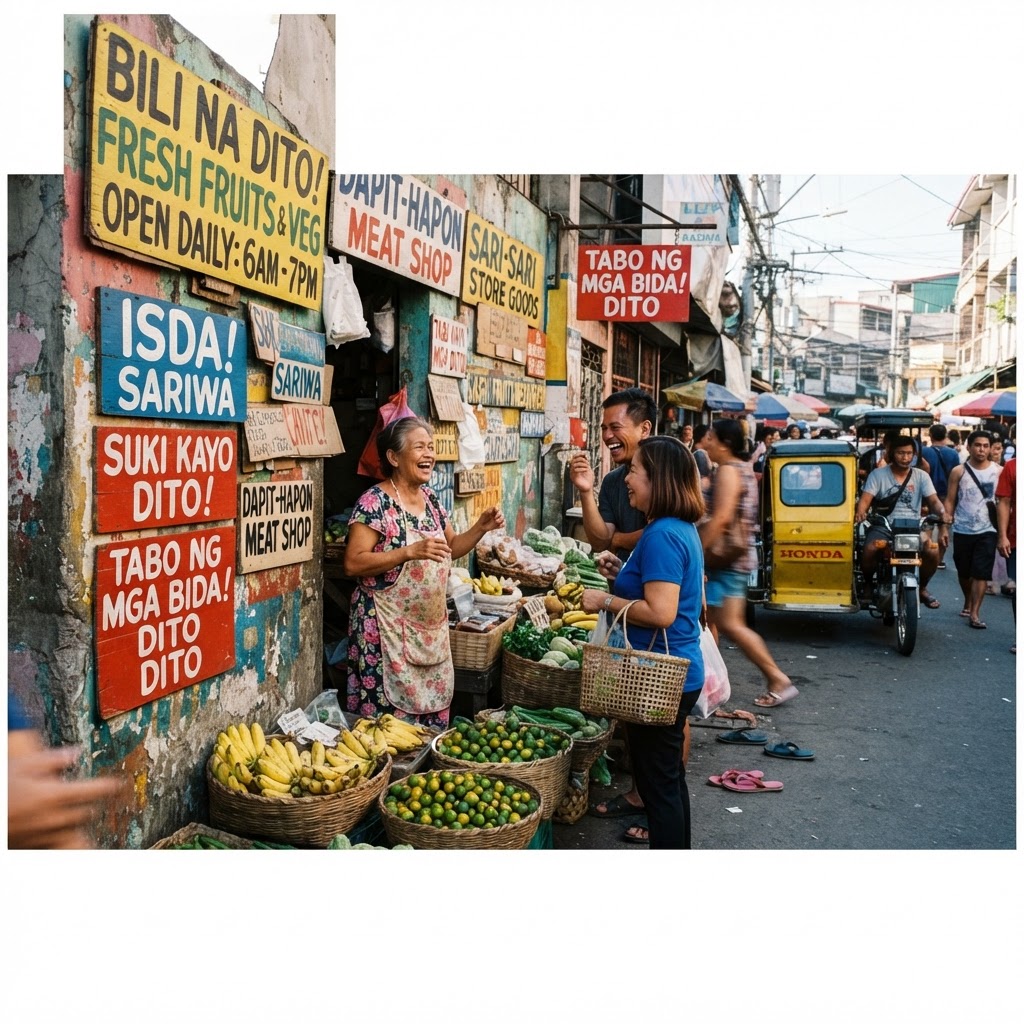
Filipino vocabulary is a history lesson in itself. Malay roots anchor the core grammar; Spanish arrived with 333 years of colonial rule and left hundreds of words — kumusta from cómo está, tsinelas, silya, etcera; English came with the American century; Hokkien Chinese arrived with the traders — lumpia, pansit, suki.
The everyday result is Taglish, a fluid blend that sounds chaotic and works perfectly. Do not be surprised to hear a sentence travel through three languages and land gracefully.
The phrasebook that matters
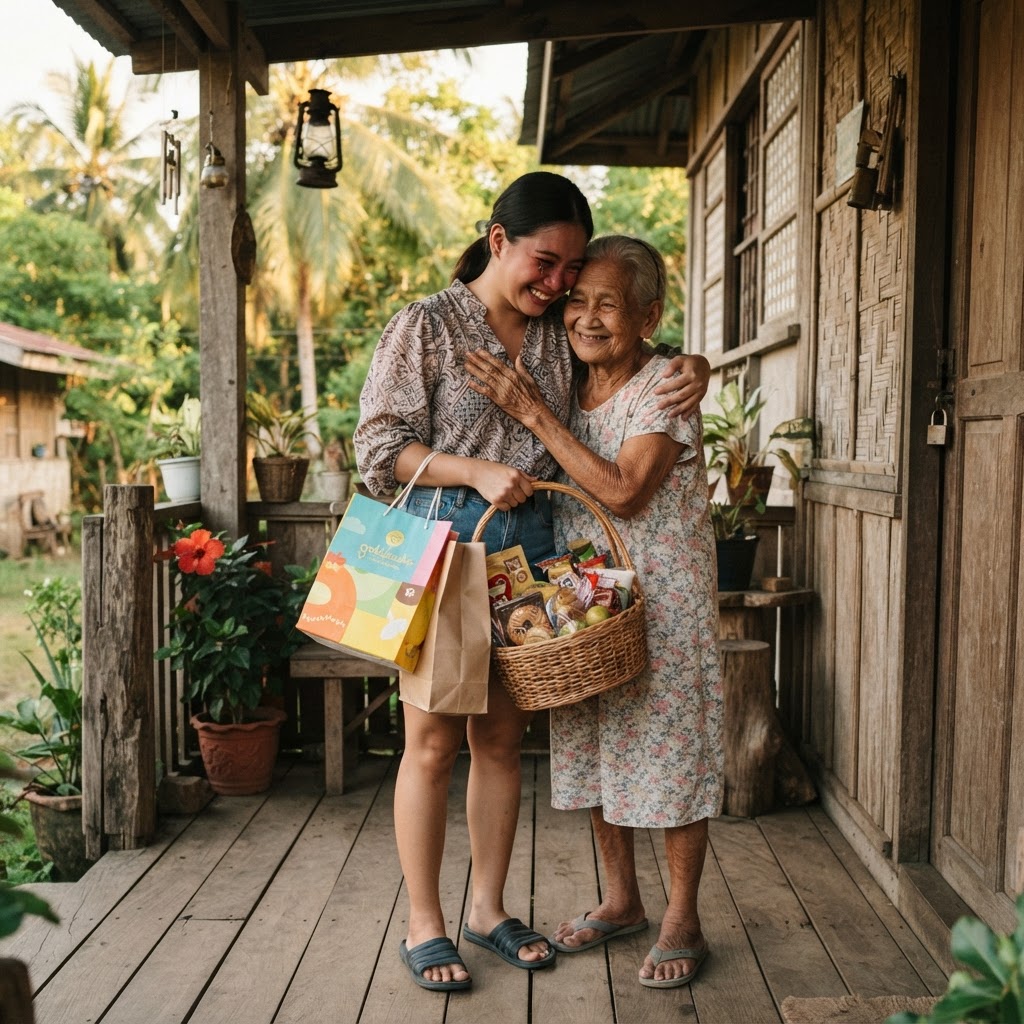
Three words open most doors: salamat (thank you), kumusta (how are you?), and kain tayo (let's eat — an invitation you will actually hear). Add po to any of them and you demonstrate respect, which is itself a language here.
Locals light up when visitors try. Learn those four words, say them with po, and you are no longer a stranger — you are a guest.