Cardboard boxes packed by overseas Filipino workers with shampoo, chocolates and sneakers — and unpacked at Christmas like treasure chests. The balikbayan box, explained.
What goes in the box
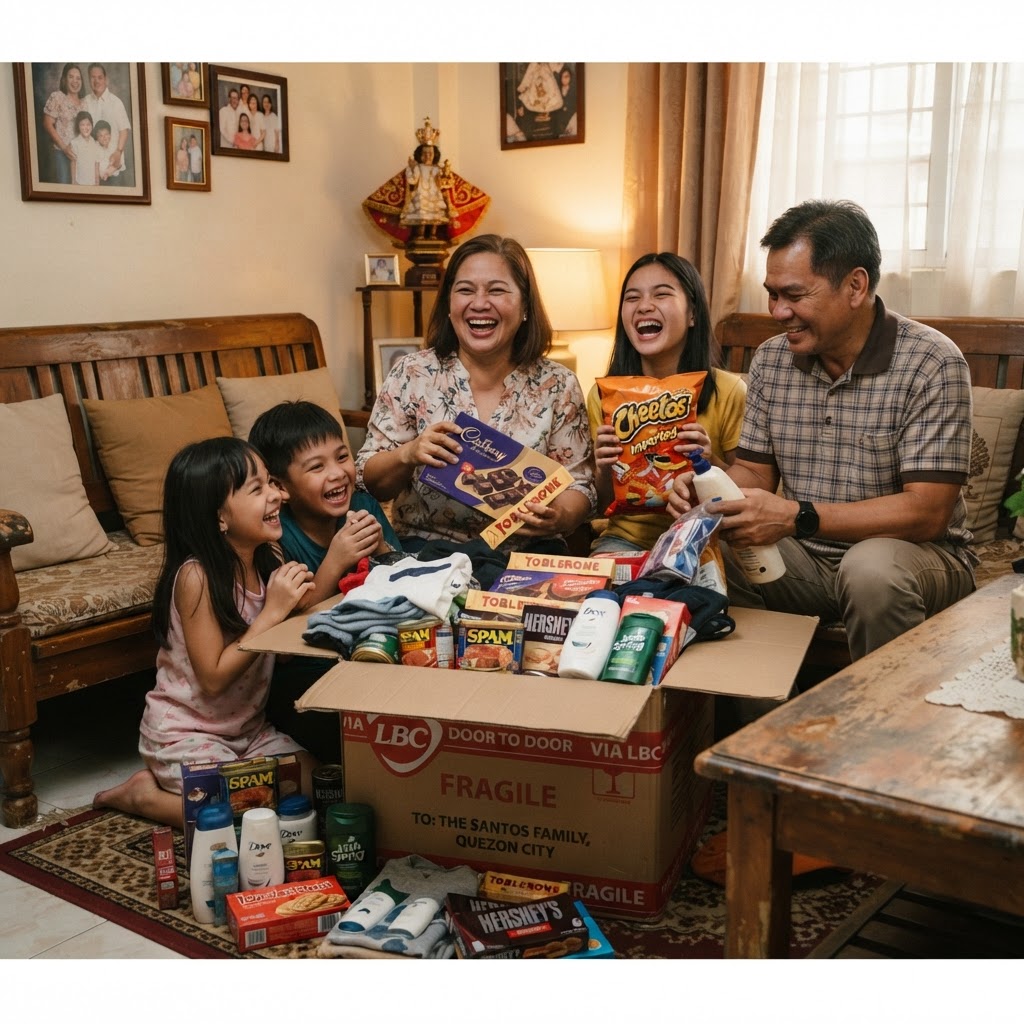
A balikbayan box is a large cardboard carton — roughly 2 by 2 by 3 feet — packed by an overseas Filipino worker and sent home by sea freight. Inside: toiletries, chocolates, canned goods, sneakers, coffee, toys, shampoo by the liter. Almost none of it is a mystery; there is a list, negotiated over months of video calls.
The word balikbayan means returning to the country — the box is what travels when the person cannot.
The unboxing ritual
At Christmas the boxes arrive by the thousands, and their opening is a family event — scheduled, filmed, argued over. Each item is greeted by name: the perfume for the mother, the Spider-Man shoes for the youngest, the Vitamin C for lolo. Nothing is thrown away; the boxes themselves get repurposed for a decade.
Filipinos who grew up with OFW parents describe the unboxing as the moment distance briefly closed.
More than packages
Economists see remittances; families see presence. The box says: I am still here, I still know your sizes, I still remember what you asked for last year. Its economics are real — sea freight consolidators run a billion-peso industry — but its meaning is anthropological.
Ask any OFW: packing a box is one of the pleasures of the working year. It is the one errand done in advance of love rather than in reply to need.
Balikbayan, the returning traveler
The term predates the boxes: in 1973 the government created the balikbayan program to welcome returning Filipinos with visa-free stays and airport lanes. The word then migrated to the cartons they shipped, and finally to the whole emotional economy the boxes carry.
If you meet someone shipping one at a Manila port, you are watching a postal system and a family reunion in the same frame.