About the Philippines
From breathtaking islands to vibrant traditions, the Philippines is a country of endless wonders.
Where is the Philippines?
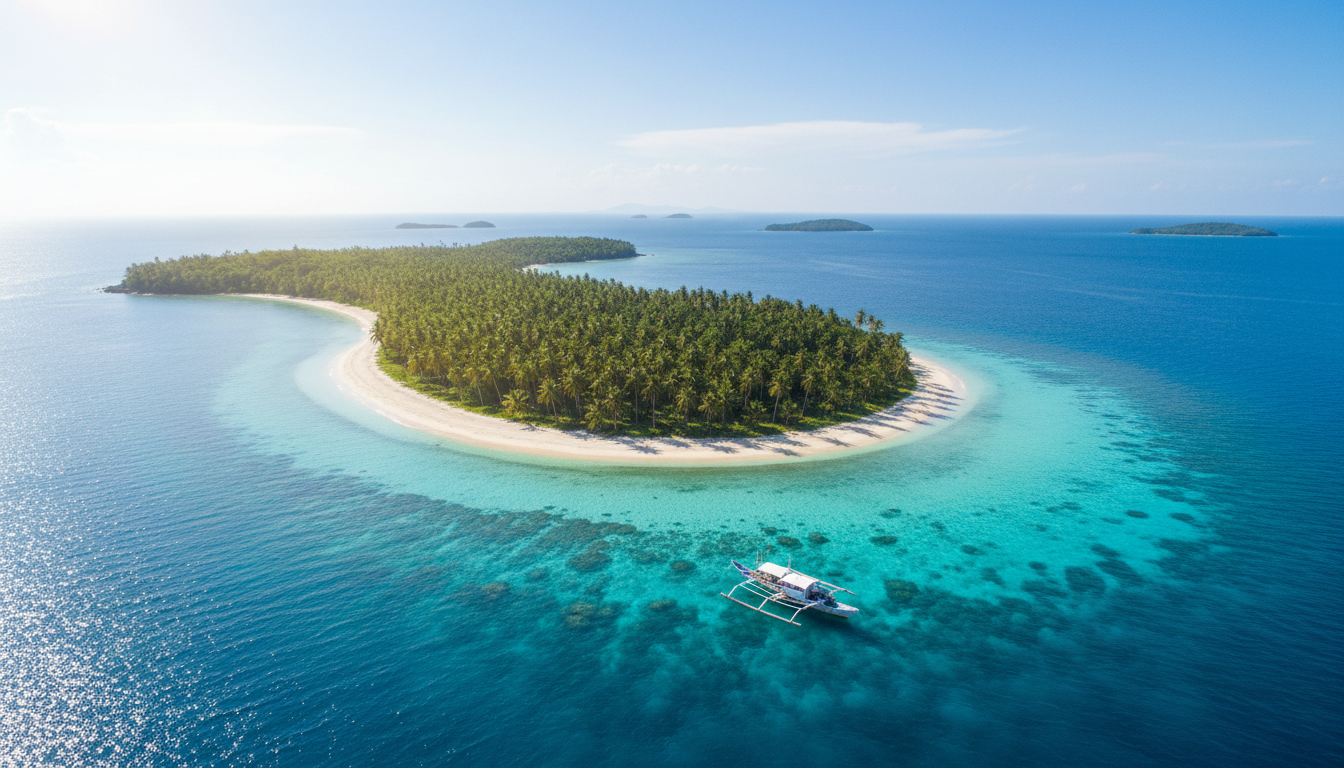
Nestled in the heart of Southeast Asia, the Philippines is a vibrant archipelago of over 7,600 islands — right where the Pacific Ocean meets the South China Sea. We're the tropical sweet spot of Asia, just below Taiwan, east of Vietnam, and north of Indonesia.
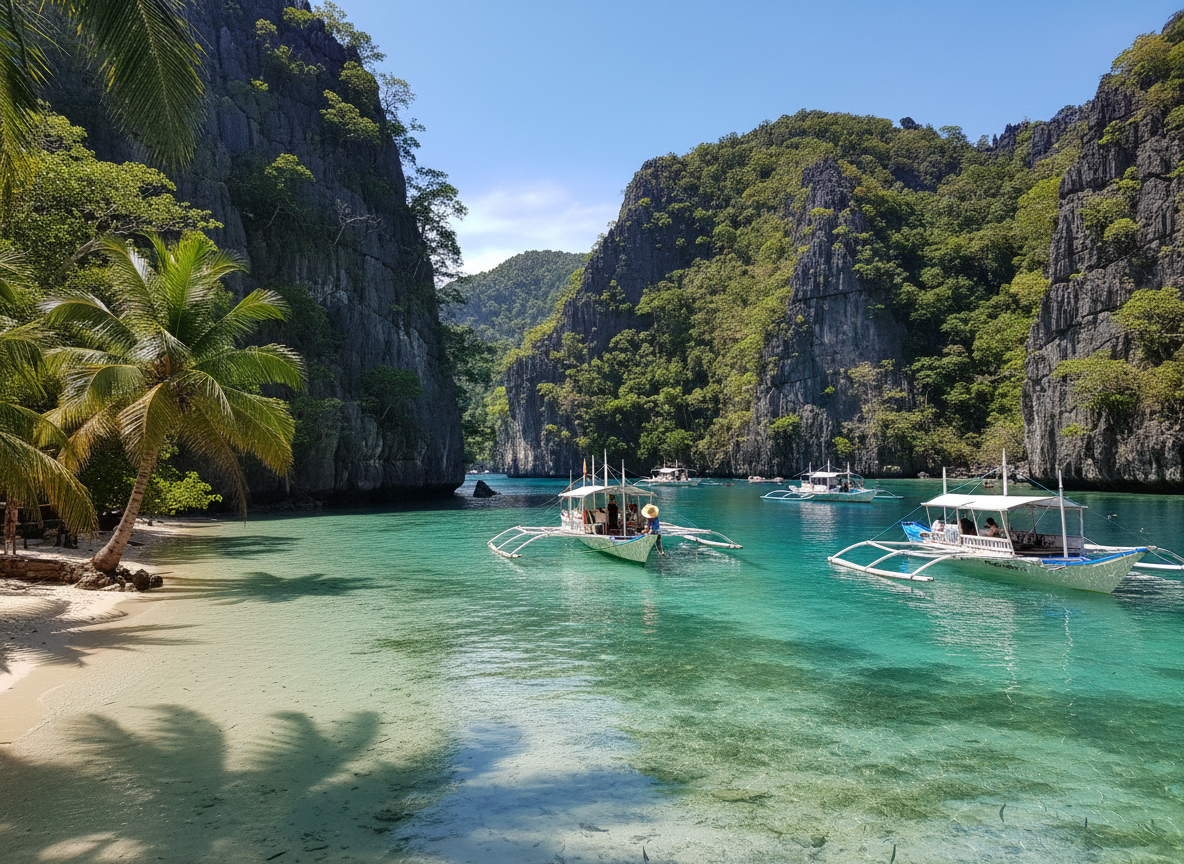
With sparkling coastlines, lush rainforests, and some of the world's most biodiverse marine ecosystems, the Philippines is a natural wonder waiting to be explored.
A Tapestry of History
The story of the Philippine islands begins thousands of years ago, with Austronesian seafarers navigating by the stars, building vibrant communities, and trading with neighbors across Asia.
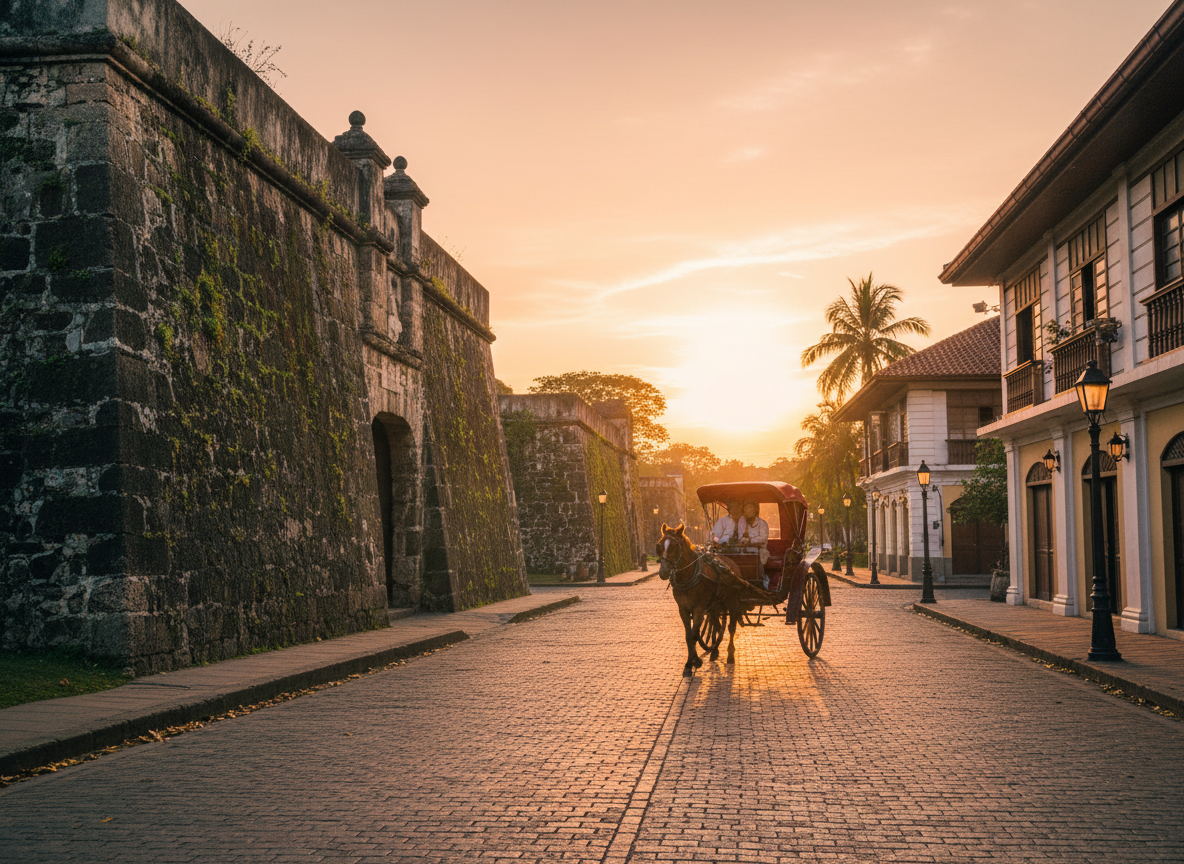
For over 300 years under Spanish rule, the islands became a melting pot — East meeting West in a swirl of traditions, flavors, and ideas. Today, the echoes of history are everywhere: in centuries-old churches, vibrant festivals, and the resilience of the Filipino people.
A World of Wonders
The Philippines is divided into three main island groups, each with its own personality, adventure, and rhythm.
Luzon
The largest island, home to the bustling capital Manila, the heritage city of Vigan, and the dramatic peaks of the Cordilleras.
Visayas
A sun-drenched playground of white-sand beaches, historic Cebu, the Chocolate Hills of Bohol, and vibrant festivals of Iloilo and Bacolod.
Mindanao
The land of majestic mountains, the enchanting island of Siargao, the colorful cultures of Davao and Zamboanga, and the legendary Lake Lanao.
The Philippine Flag
A Flag With a Mood
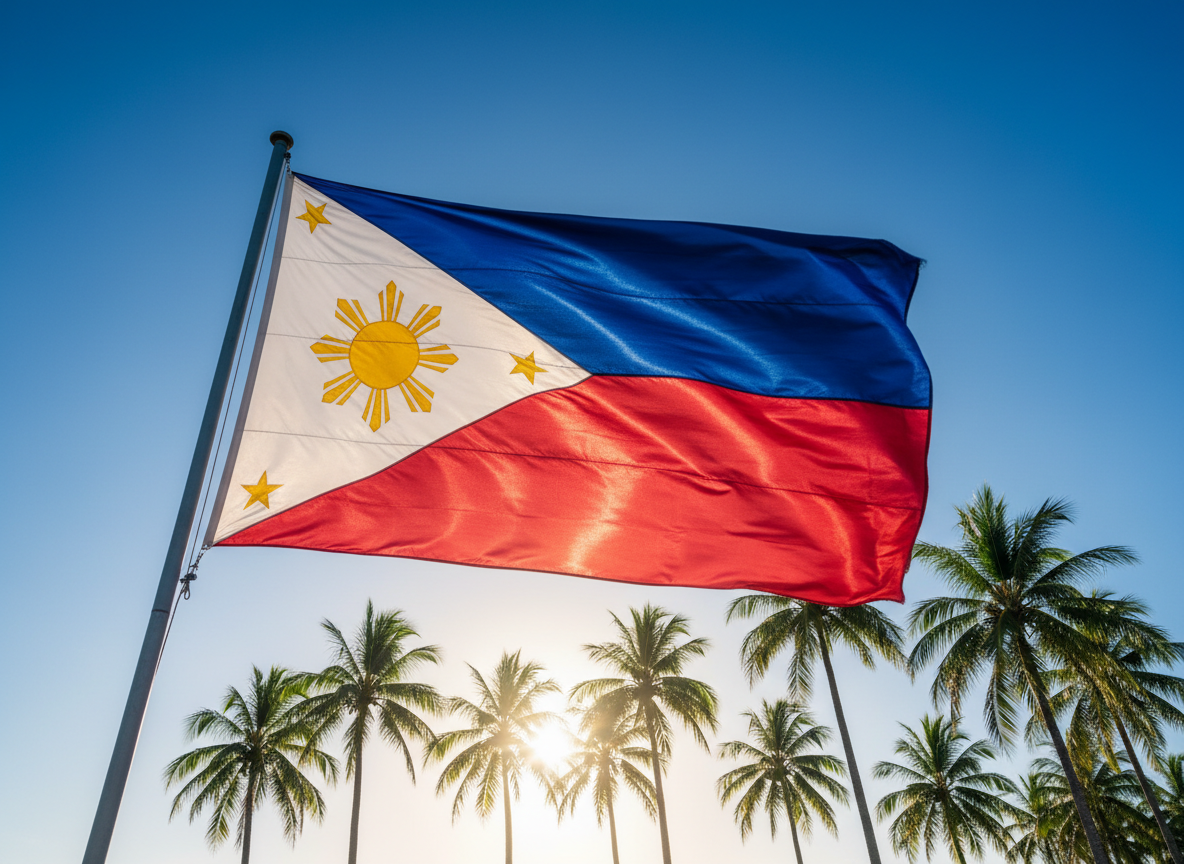
The Philippine flag is the only national flag that can indicate a state of war. When the red stripe is on top, the country is at war; when blue is on top, it's peace time!
Three Stars, One Sun
The three stars represent Luzon, Visayas, and Mindanao. The sun stands for independence, with its eight rays symbolizing the first eight provinces to revolt against Spanish rule.
Colors With Meaning
Blue stands for peace, truth, and justice; red for patriotism and valor; white for purity and hope. The flag was conceptualized by Emilio Aguinaldo in 1897.
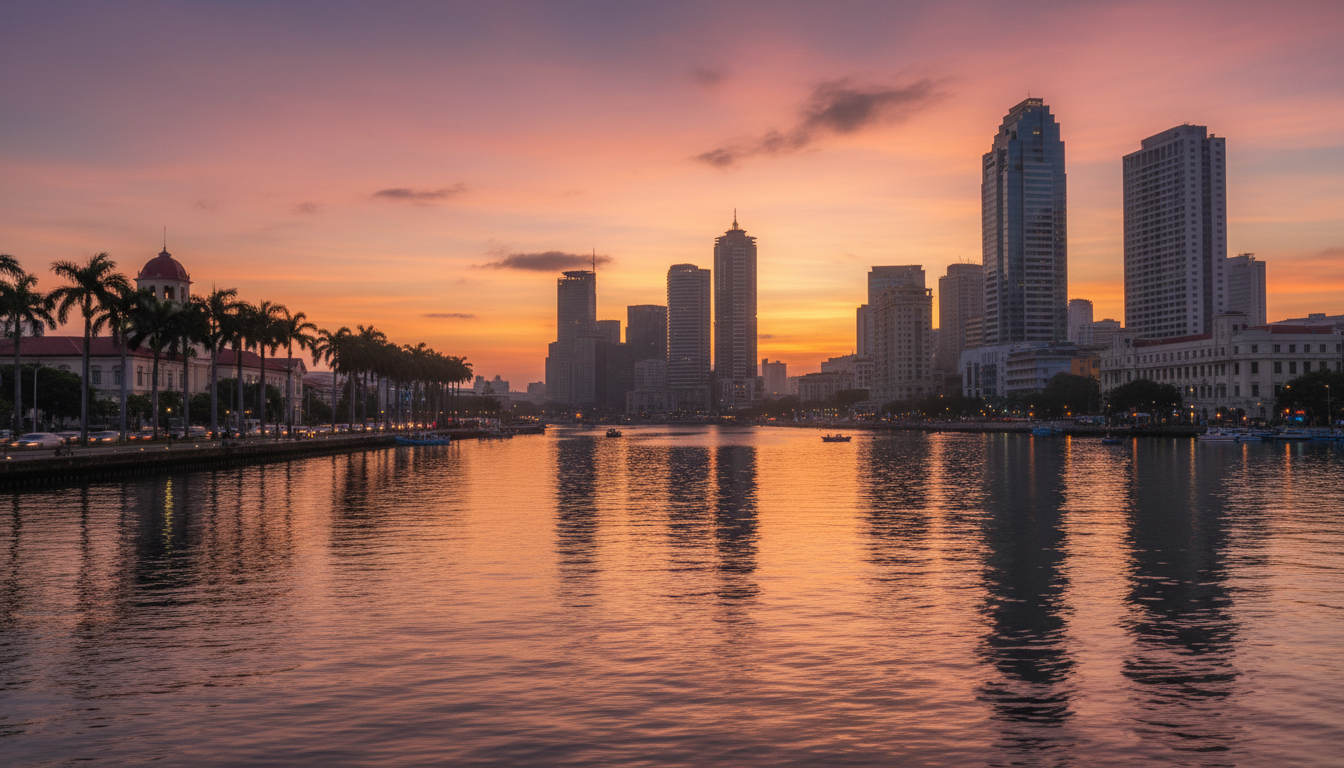
Manila — The Heartbeat of the Philippines
Manila is more than just the capital — it's the electric soul of the Philippines. Centuries-old Spanish churches stand shoulder-to-shoulder with glittering skyscrapers, and the streets pulse with the energy of jeepneys, vendors, and laughter.
Stroll along the sunset-kissed shores of Manila Bay, lose yourself in the bustling markets of Quiapo, or savor the flavors of Binondo, the world's oldest Chinatown. Manila's greatest treasure is its people — resilient, warm, and always ready with a smile.