7,107? 7,641? The famous number changed in 2016 — and depends on the tide, the technology and what you are willing to call an island.
7,107 — or 7,641?
For decades every schoolchild learned the number 7,107. Then in 2016 the national mapping agency NAMRIA, working with satellite imagery and newer surveys, updated the count to 7,641 islands — over 500 more than the textbook figure.
Both numbers are correct for the years they measured; the islands did not appear, they were found.
Why the count keeps changing
Counting islands is harder than it sounds. At low tide, sandbars and rocks join the archipelago; at high tide they vanish. Storm surges rebuild coastlines; satellite resolution improves; definitions shift on what counts as an island versus an islet or a rock.
The 7,641 figure itself now coexists with even newer counts pushing higher, which is why Filipino trivia nights have officially become impossible.
Only about 2,000 have names
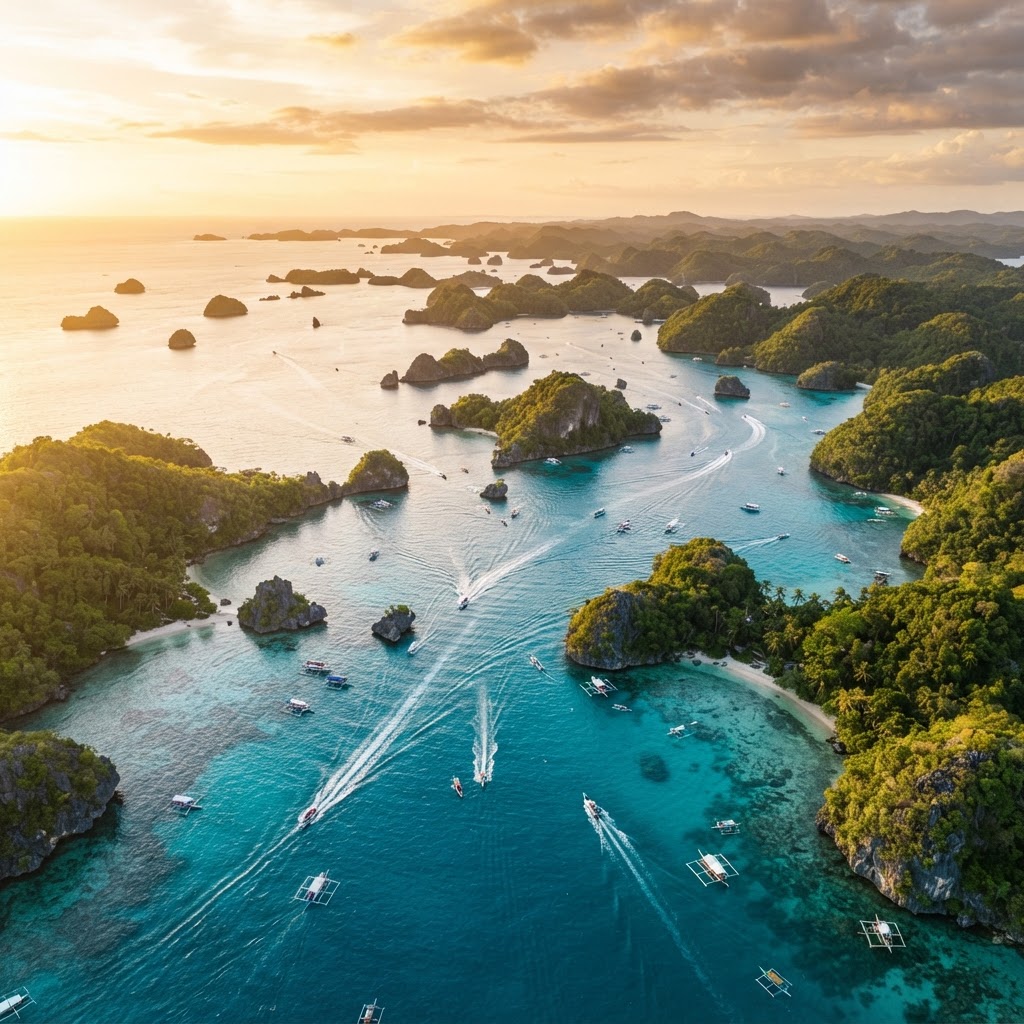
Of the thousands of islands, roughly 2,000 have names on official maps, and around 1,000 are inhabited. The rest are sand, rock, mangrove and bird territory — and a large share sit in the Palawan and Visayan seas, the archipelago's island-dense heart.
Many have no fresh water, no pier and no residents — which is exactly what makes them attractive to travelers.
Why it matters for travelers
The practical upshot is infinite island-hopping: the Philippines offers more coastline-adjacent surprises than a lifetime of trips can exhaust. New coves and sandbars keep entering the tour economy — Anawangin, Naked Island, the Burdeos islets — discovered by photographers before mapmakers.
So when someone asks how many islands the Philippines has, the honest answer is: enough. Ask which ones to visit, and the conversation gets much better.