From Austronesian sailboats to a modern republic of 115 million — the five eras that shaped the Philippines, and the marks each one left on daily Filipino life.
Before the sails of Europe
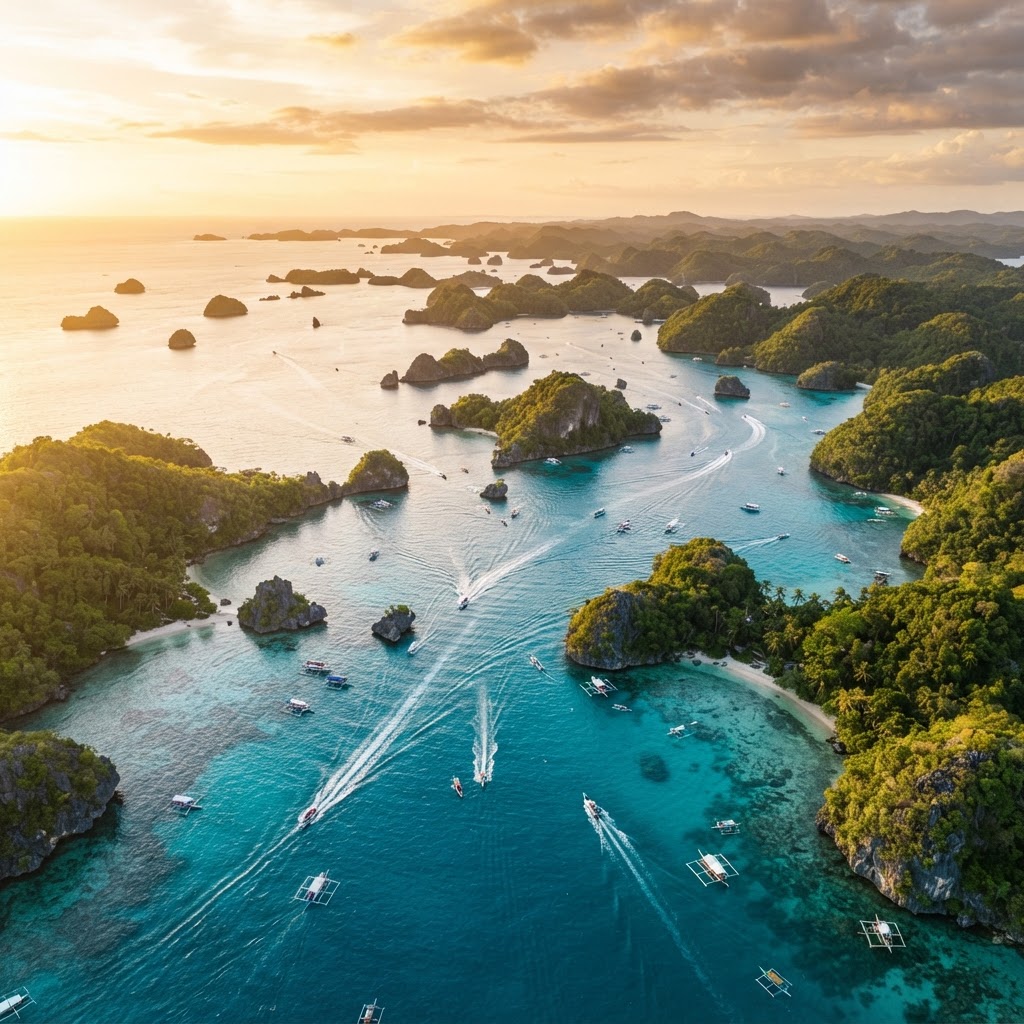
Austronesian voyagers settled the islands thousands of years before any European arrived, organizing into barangays — boat-borne communities that became the basic unit of Filipino society, a name still used for neighborhoods today. They were never isolated: gold work in Butuan, trade with China, porcelain from the Song dynasty, and Islamic sultanates in the south all predate Magellan.
By 1500 the archipelago was a busy crossroads of the Malay world — literate in baybayin script in places, Muslim in the south, animist in the highlands, and maritime everywhere.
333 years under Spain
Ferdinand Magellan landed in Cebu in 1521; Miguel López de Legazpi founded Manila in 1571; and for the next three centuries the islands were governed from Mexico City and named after a Spanish king. Spain's deepest legacy was not political but spiritual: conversion made the Philippines Asia's largest Catholic nation.
The Manila-Acapulco galleon trade linked Asia to the Americas for 250 years. Chinese merchants settled and intermarried. And a new Filipino identity slowly assembled itself from the collisions.
Revolution and the first republic
José Rizal's novels — Noli Me Tángere and El Filibusterismo — gave the ilustrado generation a language for grievance, and his 1896 execution made a martyr of him. That same year Andrés Bonifacio's Katipunan began an armed revolution against Spanish rule.
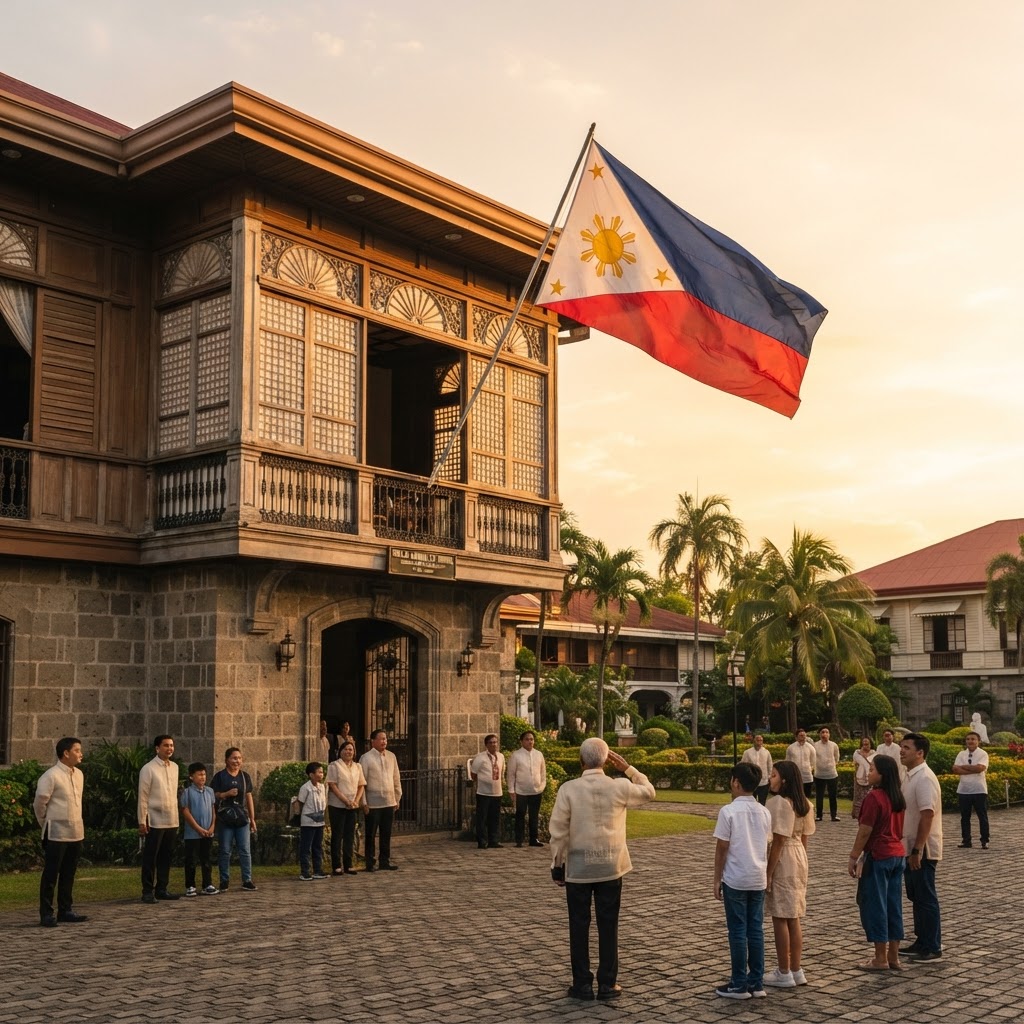
In 1898, at Kawit, Cavite, Emilio Aguinaldo declared independence and the Philippines became Asia's first constitutional republic — a moment of triumph that would last less than a year.
America, war, and independence
The Treaty of Paris sold the islands from Spain to the United States for $20 million, and a new war followed. American rule brought English, public schooling, and a slow path toward commonwealth status — interrupted brutally by Japanese occupation in World War II, the Battle of Manila, and liberation.
On July 4, 1946 the Philippines finally gained full independence. English remained, democracy returned, and the American chapter left its own sediment: jeepneys from war surplus, a love of basketball, and a diaspora that would grow to ten million.
The modern republic
Post-war decades brought Marcos-era martial law, the 1986 People Power revolution that ended it bloodlessly, and a turbulent young democracy of 115 million people.
Today the Philippines is one of Asia's fastest-growing economies, a cultural exporter of music, teleseryes and food, and a nation whose story — every era of it — is still audible in its fiestas, its faith, its languages and its roads.