White Beach
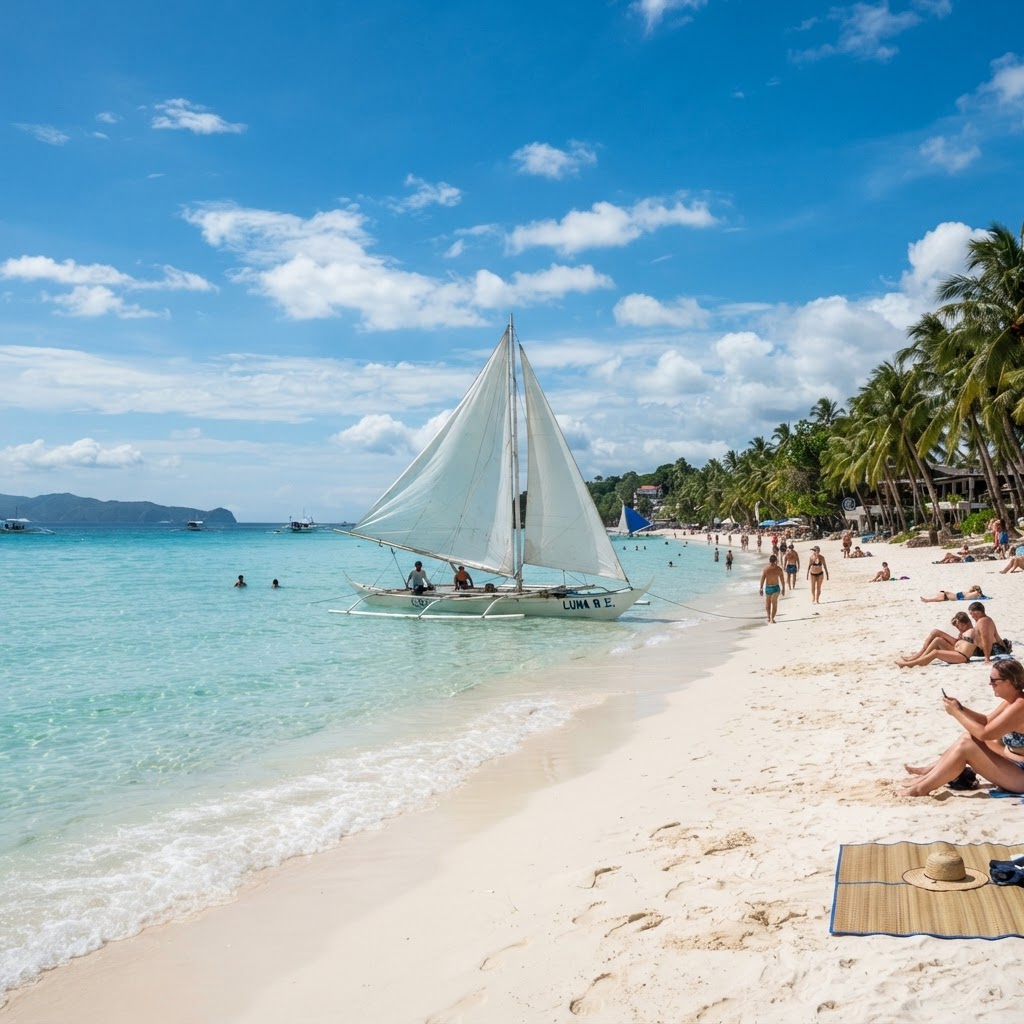
The island's signature four-kilometer stretch of powder-fine white sand on the west coast, facing the sunset — the heart of Boracay's beach life and the reference point for the island's station areas.
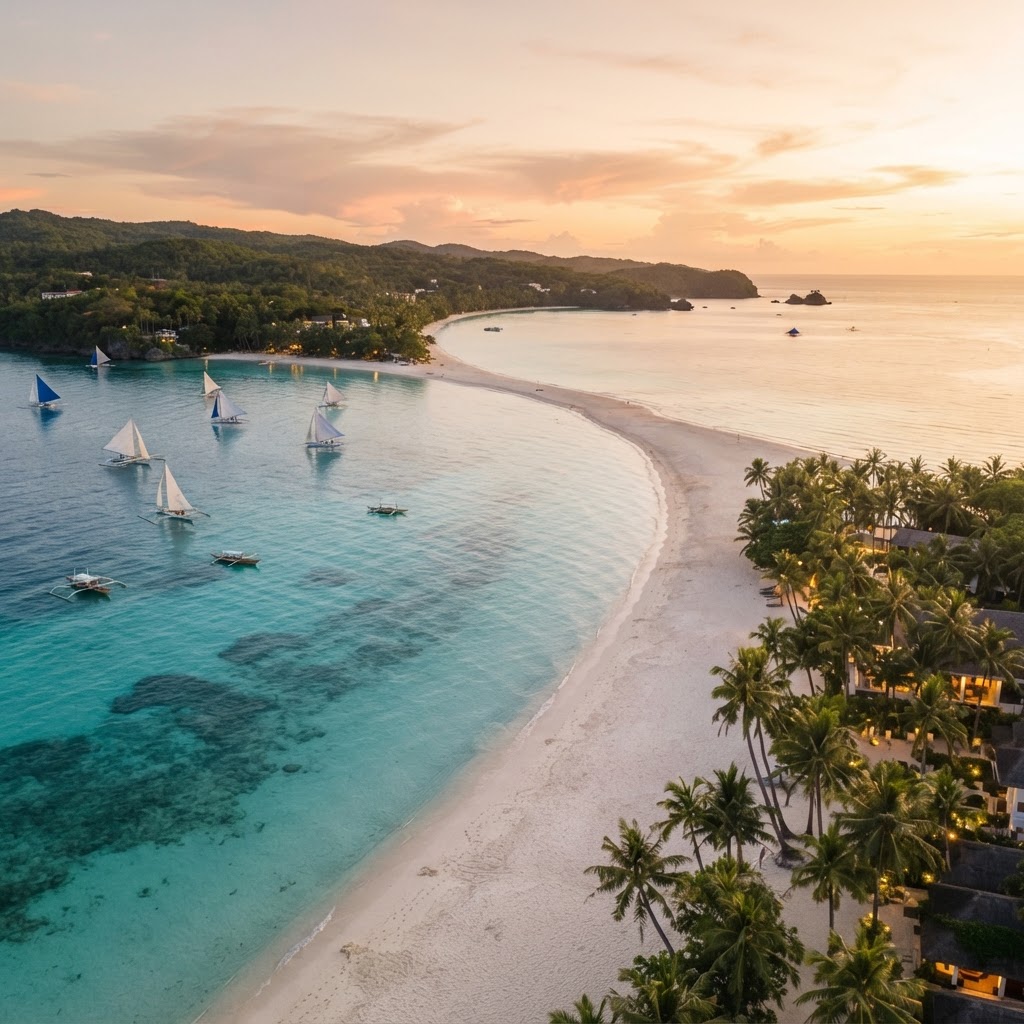
A small island off Aklan's coast with a famous four-kilometer stretch of powder-white sand, turquoise shallows, and legendary sunsets.
Boracay is a small island off the northwestern tip of Panay, administered as part of the municipality of Malay in the province of Aklan, Western Visayas. What it lacks in size it repays in concentration: a four-kilometer stretch of powder-fine white sand on its west coast, shallow turquoise water, a famous sunset sky, and one of the most developed beach-resort scenes in the Philippines — all within an island you can walk across in a matter of minutes in places.
The island's geography is easy to grasp. The west coast holds White Beach, the main shoreline, informally organized into stations that reflect how busy and central each stretch feels — with the commercial bustle, dining, and nightlife concentrated mid-beach and the sand widening and quieting toward the northern end. The east coast holds Bulabog Beach, the windward side, which turns active for kiteboarding and windsurfing in the breezy months. Beyond these two shores, quieter pockets — the shell-strewn northern tip at Puka, small coves like Diniwid, and interior viewpoints over the island — reward travelers who explore past the main strip.
Boracay is not the flight destination itself. The island has no airport: travelers fly to mainland gateways in Aklan — Caticlan, closest to the jetty ports, or Kalibo, farther away — and then complete a land-and-boat transfer across to the island. Building that crossing into your plans, and choosing the right station for your pace, is the practical art of a Boracay trip.
The island also carries a visible environmental story. After a period of national closure and rehabilitation beginning in 2018, Boracay has operated under stricter environmental management, and visitor rules — from beachfront zoning to waste handling to what activities are permitted where — continue to evolve. Treat current local rules as part of the experience: a well-run island is the reason the beaches stay worth visiting.
The island's signature four-kilometer stretch of powder-fine white sand on the west coast, facing the sunset — the heart of Boracay's beach life and the reference point for the island's station areas.
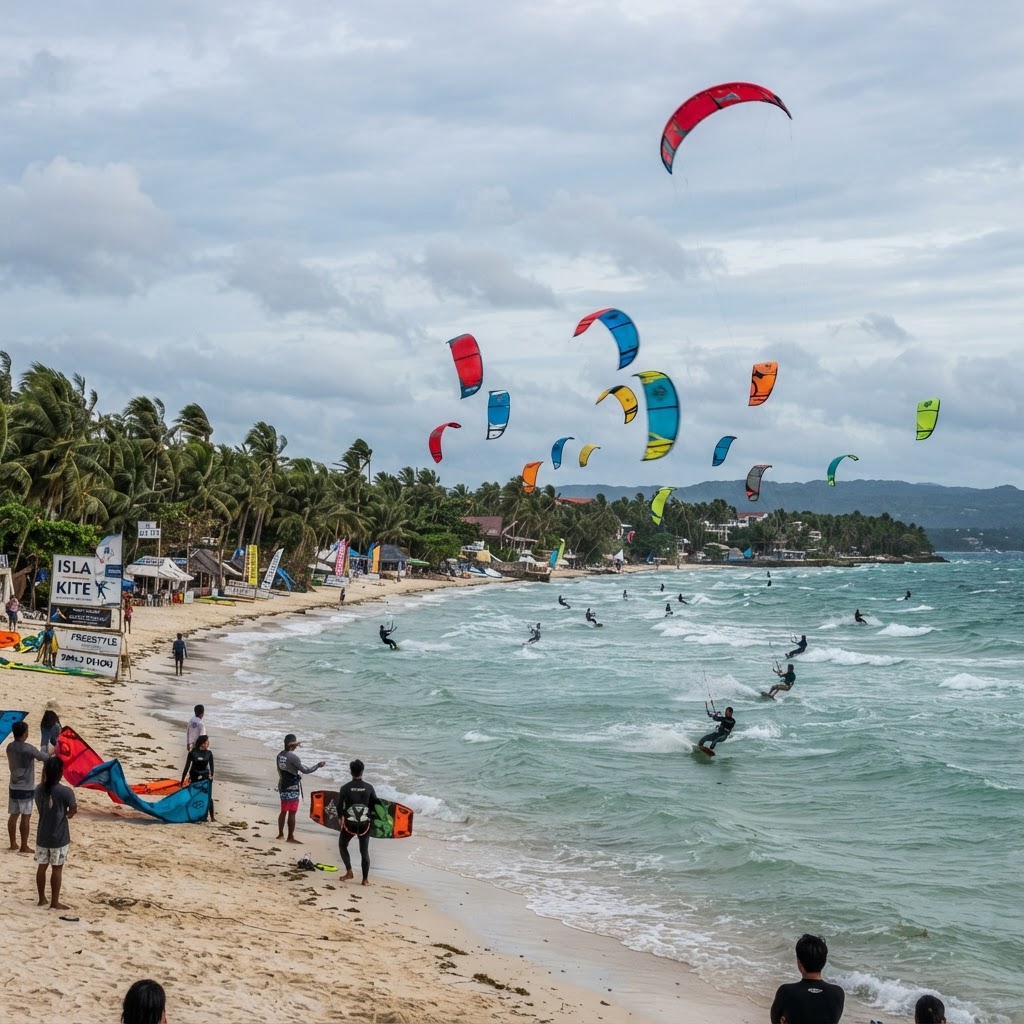
On the island's breezy east coast, Bulabog is the island's watersports shore — in windy months it draws kiteboarders and windsurfers to its shallows, a strikingly different mood from the calm west coast.

Boracay's west-facing coast is famous for its sunsets — most famously enjoyed from the sand or from a traditional paraw outrigger sailboat drifting on the evening water.
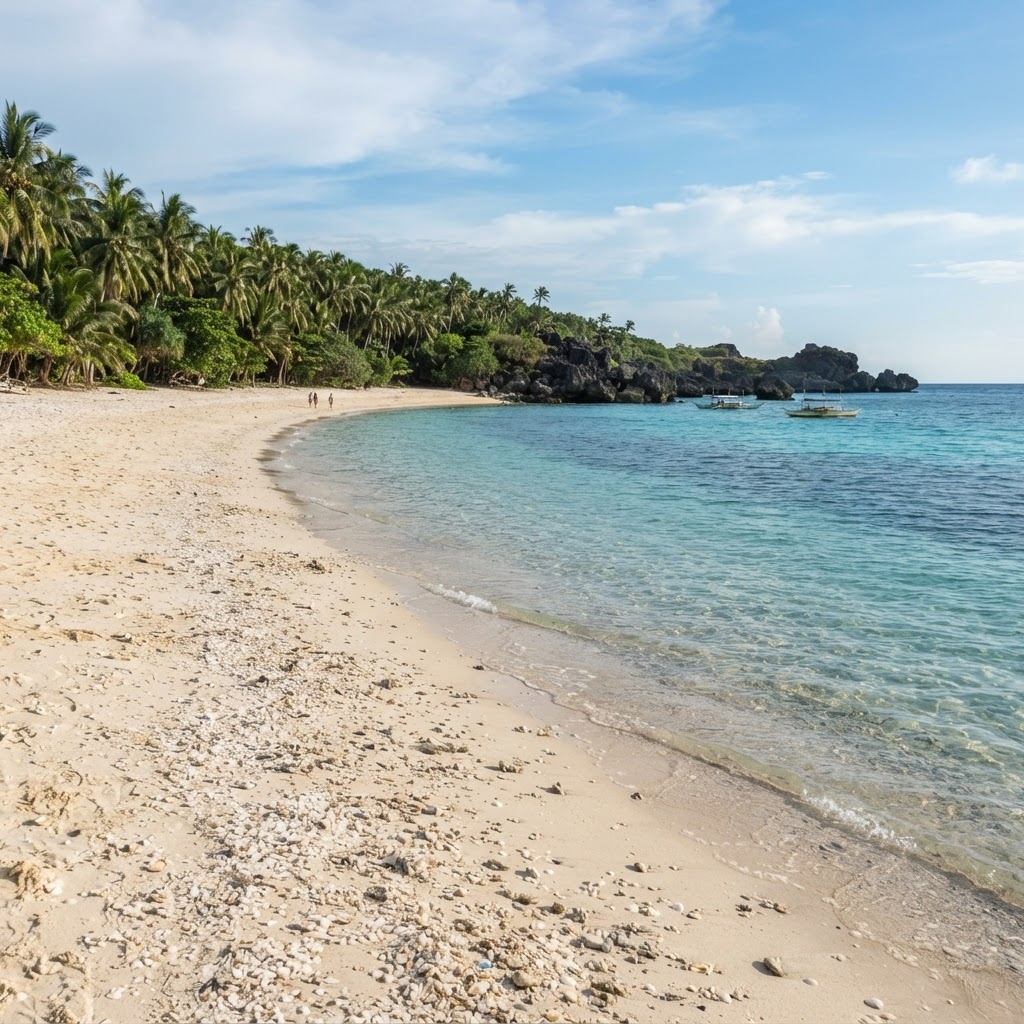
On the island's northern tip, Puka Shell Beach is a quieter, more natural stretch of sand named for the puka shells scattered along its shore — a calmer counterpoint to White Beach.
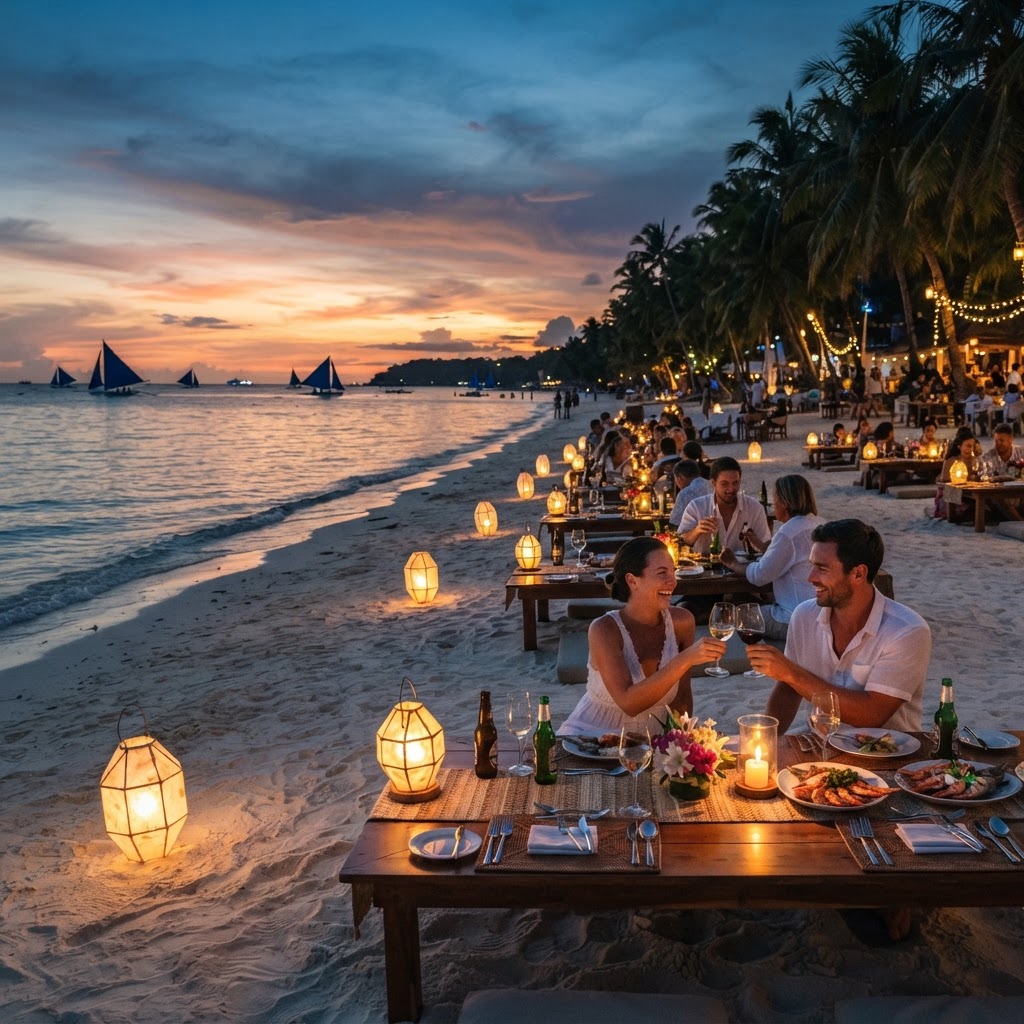
As evening falls, White Beach shifts into an open-air dining scene — lantern-lit tables on the sand, fresh seafood and international kitchens, and a laid-back nightlife that ranges from beach bars to quiet cocktails by the water.
swimming, walking the full length of the sand, and finding the stretch of beach that matches your pace
or sail — the sunset from a traditional paraw outrigger boat on the west-coast water
Try kiteboarding or windsurfing at Bulabog in the windy season, or take a beginner lesson with a local school
Join an island-hopping or coastal boat trip to nearby beaches, coves, and snorkeling spots, weather permitting
Snorkel or freedive over shallow reefs with responsible local operators; sightings and conditions vary with the season
Paddleboard or kayak in the calm early-morning water on the west coast
Puka Shell Beach at the northern tip, and small coves like Diniwid away from the main strip
Climb to an interior viewpoint such as Mount Luho for a panorama across the whole island and both coasts
lantern-lit dinners on the sand, fresh seafood, and the island's mix of international kitchens
Experience the nightlife at whatever volume suits you, from beach bars and live music to quiet cocktails by the water
Station 1 — the northern stretch of White Beach: the widest sand and the calmest pace of the main beach, with a more secluded, upscale atmosphere and the sunset end of the shore
Station 2 — the central stretch: the busiest and most convenient section, closest to the D'Mall shopping-and-dining hub, beachfront restaurants, and nightlife; expect the most activity on the sand
Station 3 — the southern stretch of White Beach: quieter and more laid-back, with a mix of more modest and mid-range stays and a local, unhurried feel
Bulabog and the east coast — the windward side away from the sunset beach: best for kiteboarding and windsurfing travelers who want to be steps from the water-sports beach, at the cost of the west-coast views
Boracay is broadly a year-round island, with the drier months typically falling from roughly December to May. The northeast monsoon season, roughly November to April, brings the winds that make the Bulabog side active for kiteboarding and windsurfing while White Beach stays relatively calm; in the warmer southwest monsoon months, roughly June to October, conditions shift and the island sees more rain, with activities and boat trips dependent on daily weather. Exact wind and season boundaries vary year to year — check current conditions and advisories when planning water activities.
Editorial guidance first — when you're ready, each option opens directly with the provider.
Explore accommodation options for your Boracay trip and confirm current availability directly with Trip.com.
We may earn a commission if you book through this link.
Search flight options for your Boracay trip and confirm current routes, schedules, and availability directly with Trip.com.
We may earn a commission if you book through this link.
Browse Trip.com's attractions and tours for the Kalibo area on the mainland side of the Boracay journey, and confirm current details and availability directly with Trip.com.
We may earn a commission if you book through this link.
Organized travel in Boracay takes coordination — island logistics, weather windows, and local arrangements. Tell our team what you have in mind and we'll help you put a workable plan together.
Talk to our teamWe only recommend what's real — no invented packages, no invented prices.
Boracay has no airport — every arrival is a chain of flight, transfer, boat, and island transport. Here's how to plan the whole journey.
Read the guide Getting thereCaticlan or Kalibo, the short boat crossing and the tricycle to your station — the complete route to Boracay, step by step.
Read the guide Where to stayStation 1's white sand, Station 2's action, Station 3's value — a guide to picking the right base on Boracay's famous strip.
Read the guide