Bohol landscape
Bohol, Central Visayas · Philippines

Bohol

The island of the Chocolate Hills — a jade-green countryside of cone-shaped hills, a jungle river, tiny tarsiers, and the white-sand beaches of Panglao just across a bridge.

About Bohol

The island of the Chocolate Hills — and the beaches just across the bridge

Bohol packs an unusual range of experiences into a single island province. Its interior holds one of the world's most distinctive landscapes — more than a thousand near-symmetrical, cone-shaped hills that turn from green to brown in the dry season — alongside a jungle river, a misty man-made forest, and one of the world's smallest primates. Around its edges sit centuries-old coral-stone churches, quiet provincial towns, and, on nearby Panglao Island, a modern resort strip of white-sand beaches and dive sites.

Geographically, it helps to see Bohol as three different travel zones. Tagbilaran, the provincial capital on the south coast, is the historic port and city hub — the practical center for ferries, buses, and services. Panglao is a separate, much smaller island just off the southwest coast, linked to the mainland by bridges: it is home to Bohol–Panglao International Airport, the busy Alona Beach resort strip, and the departure points for dive and island-hopping trips. The interior — the Chocolate Hills around Carmen, the Loboc River, the Bilar forest, and the tarsier sanctuary at Corella — is the countryside heart of the province, roughly an hour's drive inland from the coast. Farther east, beyond the main tourist circuit, the Anda coast offers some of the island's quietest beaches.

Bohol also carries deep historical threads. The 1565 Blood Compact between the Spanish explorer Miguel López de Legazpi and the local chieftain Datu Sikatuna is commemorated near Tagbilaran, and the province's coral-stone churches — Baclayon among the oldest surviving Spanish-era churches in the country — carry centuries of Bohol's Catholic tradition. Several of these churches were badly damaged in the 2013 earthquake and have since undergone restoration, a reminder that heritage here is living and actively cared for.

For travelers, the practical question is where to base. Panglao suits beach, dive, and resort travelers; Tagbilaran keeps you close to the port, services, and the roads into the countryside; the Loboc area offers quiet inland stays; and Anda rewards travelers willing to go further for calm. A well-planned Bohol trip usually combines time on the coast with at least a day inland — the two halves of the province complement each other.
Places & Experiences

Highlights of Bohol

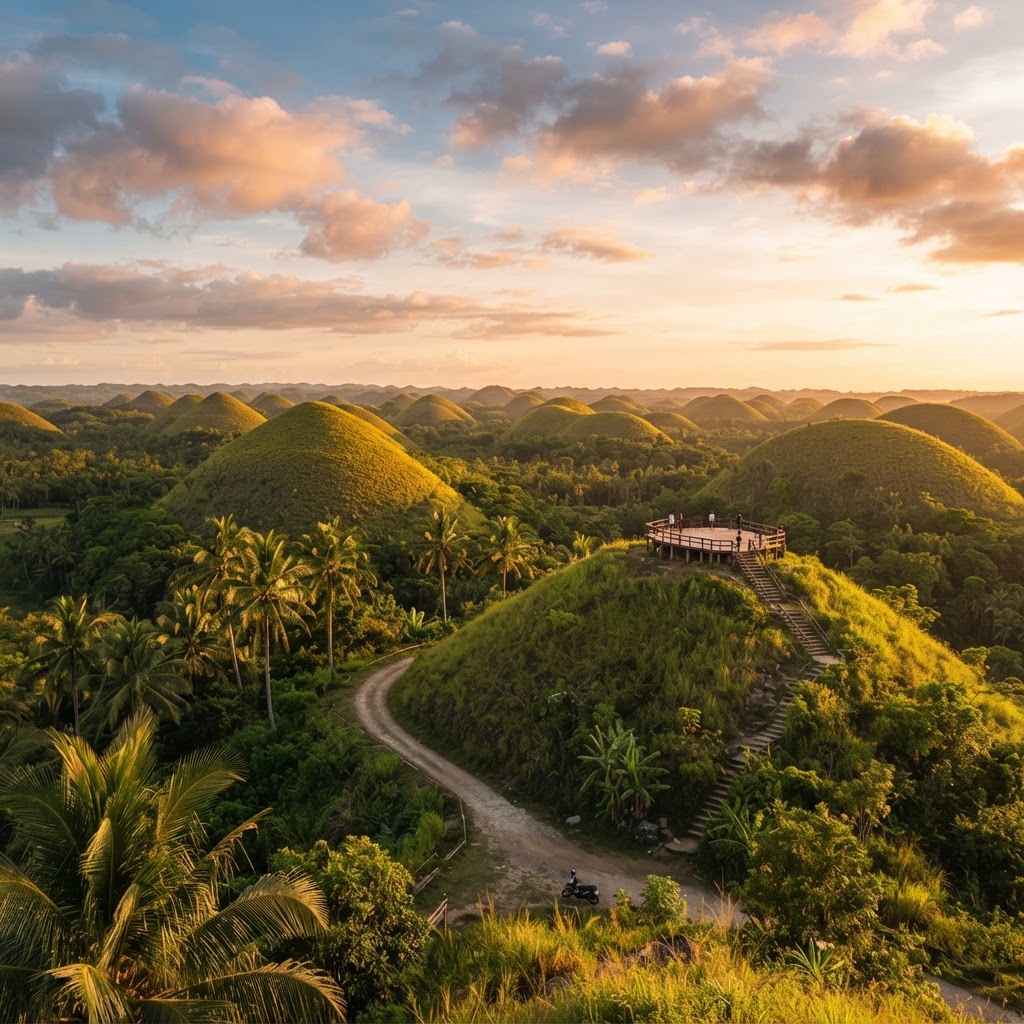
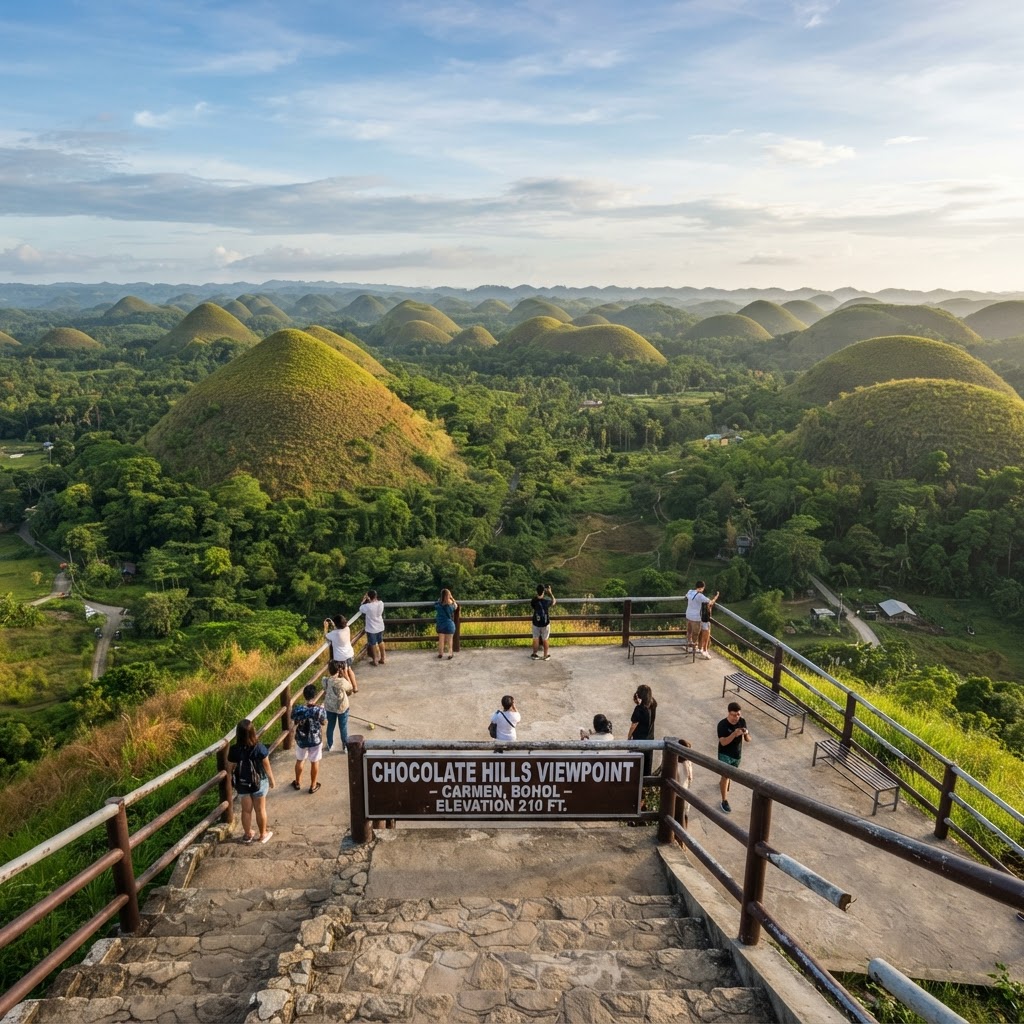
The Chocolate Hills

The Chocolate Hills

More than a thousand near-symmetrical, grass-covered limestone hills roll across the interior around Carmen and Sagbayan — Bohol's signature landscape, best known from the established viewpoints that let you take in the formations stretching in every direction.

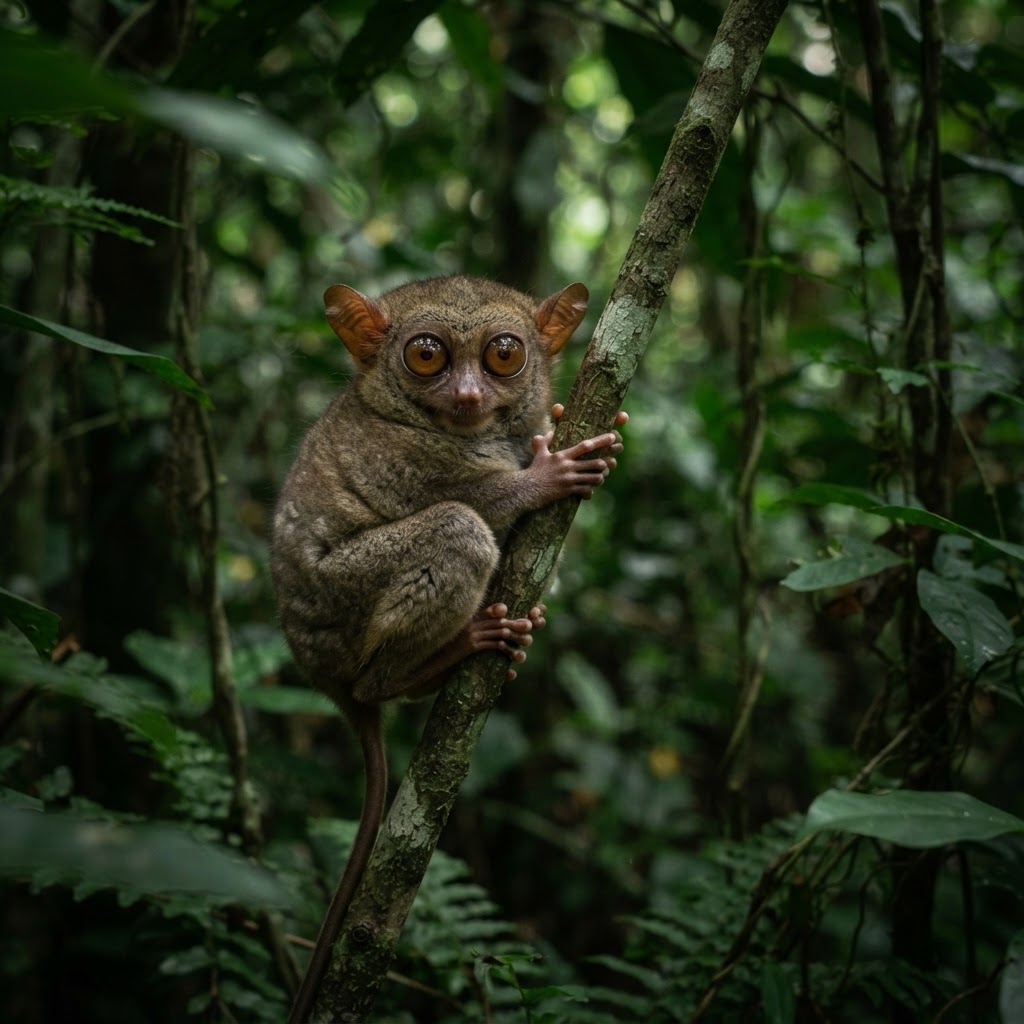
Philippine Tarsiers

Philippine Tarsiers

One of the world's smallest primates, the Philippine tarsier survives in Bohol's remaining forest. Visit a conservation-oriented sanctuary such as the Philippine Tarsier Sanctuary in Corella, where the animals live in near-natural habitat: keep a respectful distance, never touch or feed them, and avoid flash photography — sightings are never guaranteed.

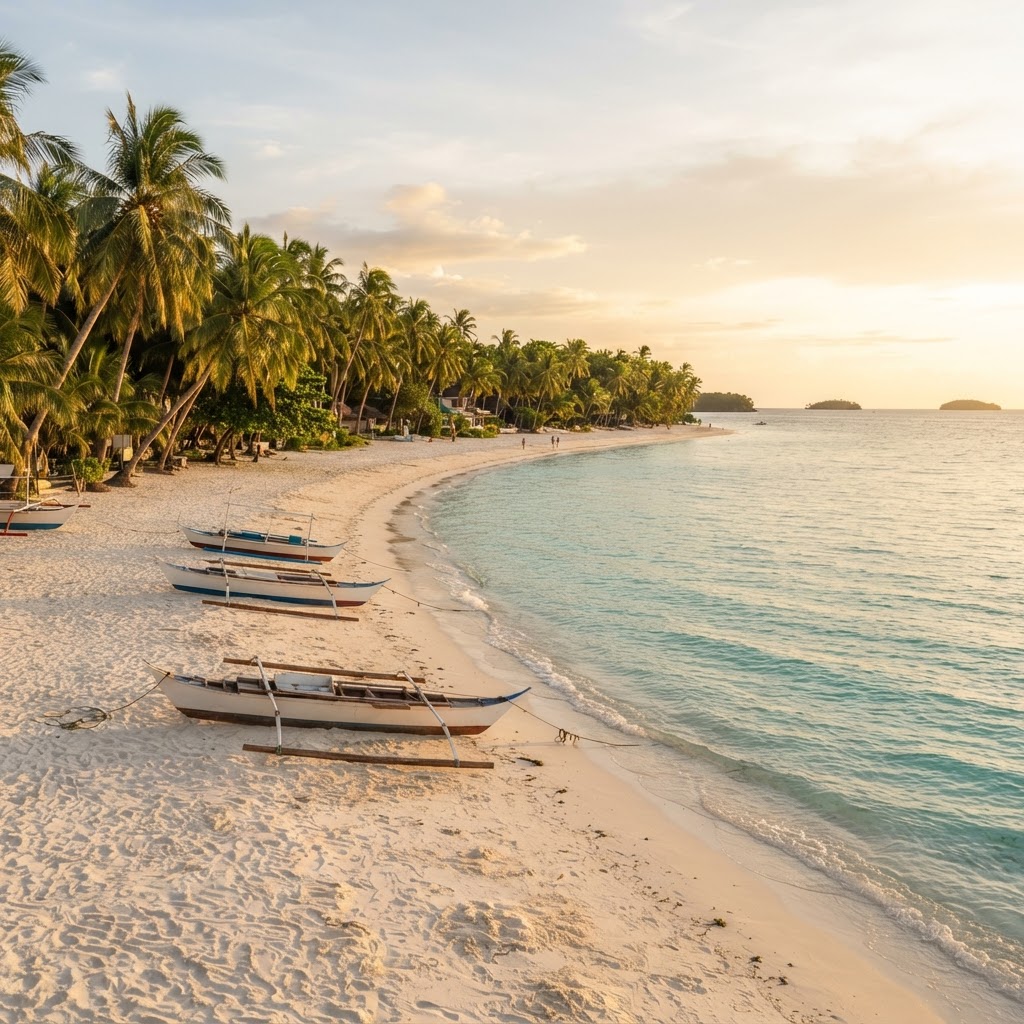
Panglao Island

Panglao Island

A separate island linked to the mainland by bridges, Panglao holds Bohol's international airport, the busy Alona Beach strip of resorts and dive shops, and quieter stretches of white sand along its coast — the island's main beach-and-marine base.

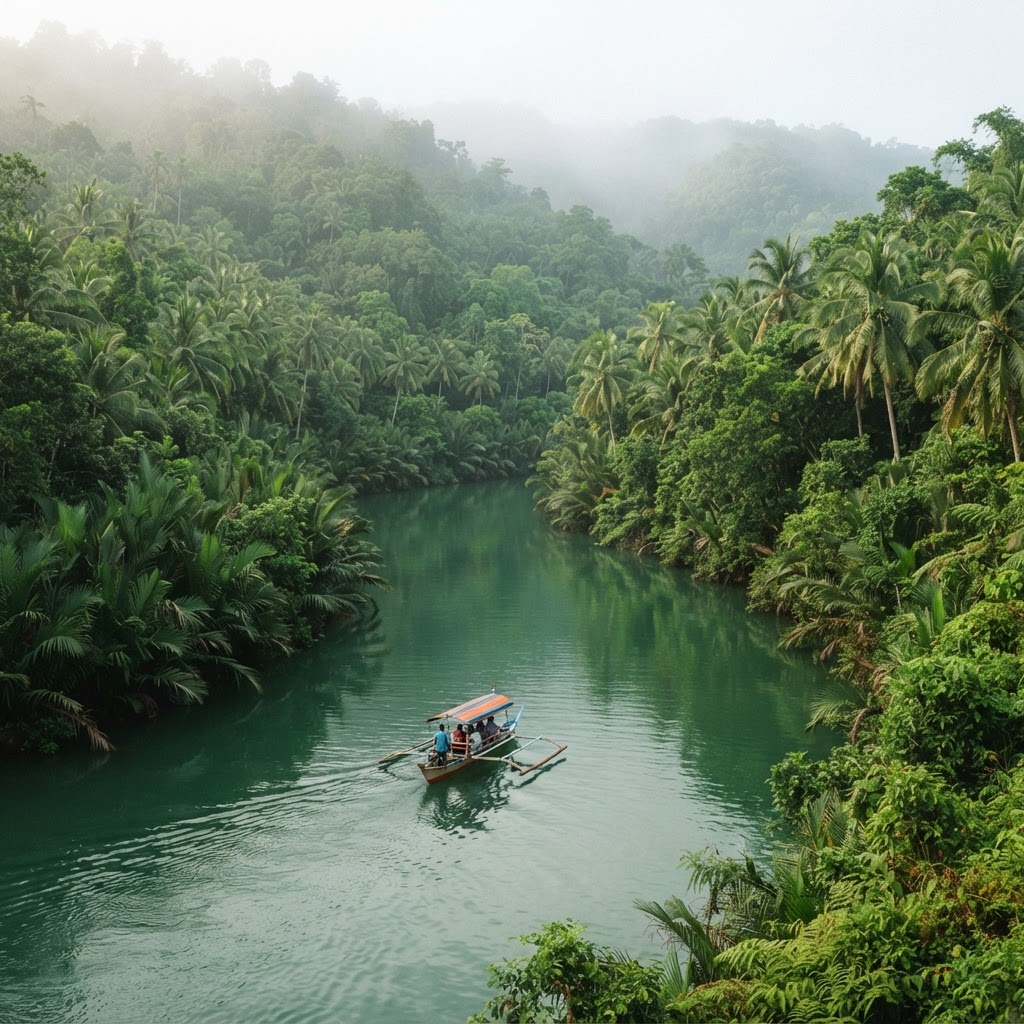
Loboc River and the Countryside

Loboc River and the Countryside

The emerald Loboc River winds through jungle and riverside villages in the island's interior; cruises drift past the greenery, and the surrounding countryside adds waterfalls and the Bilar man-made forest to the drive inland.

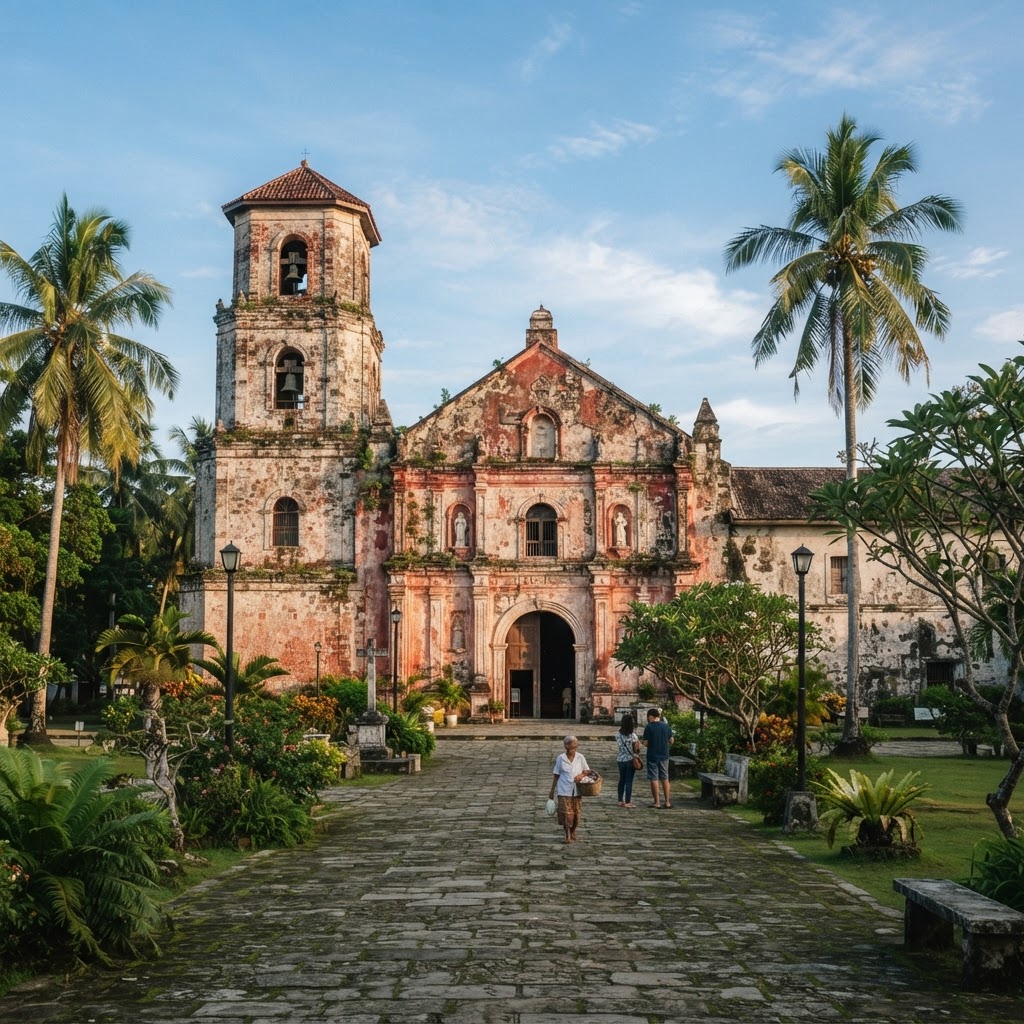
Baclayon Church and Bohol Heritage

Baclayon Church and Bohol Heritage

Bohol's coral-stone churches carry centuries of the province's Catholic story. Baclayon's church — one of the oldest surviving in the country — was damaged in the 2013 earthquake and restored, and nearby heritage sites include the Blood Compact Shrine commemorating the 1565 pact between Datu Sikatuna and Legazpi.

Travel Planning

Plan your Bohol journey

Getting There

  • Bohol–Panglao International Airport is the main gateway. It sits on Panglao Island — not in Tagbilaran — and serves domestic and some international routes; confirm current routes and schedules with your carrier.
  • Ferries and fast craft connect Tagbilaran's port with Cebu and other neighboring islands; sailing times and schedules vary, so check current timetables before planning connections.
  • Around the province, most travelers use hired vans, motorized tricycles, and habal-habal motorbike taxis, or join organized day tours — distances between the coast and the interior make planning around a base important.

Best Time to Visit

Bohol is a year-round destination, with the drier months typically falling from December to May — the hills are at their most photogenic green after the rains and turn brown in the dry season. The wetter months, usually from June to November, can bring heavier rain that affects countryside roads and island-hopping trips, so check weather advisories before booking marine excursions.

Travel Tips

  • Bohol and Panglao are distinct: Panglao is a separate island linked by bridges, and the international airport sits on Panglao, not in Tagbilaran — factor the crossing into arrival plans.
  • The main attractions sit in different zones — the Chocolate Hills and Loboc are roughly an hour or more inland from the beaches of Panglao — so plan day trips around your base rather than expecting one hotel to cover everything.
  • Tarsiers are fragile, nocturnal animals: visit only conservation-oriented facilities, never touch or feed them, avoid flash photography, and treat any sighting as a bonus rather than a guarantee.
  • Dolphin watching and island-hopping trips around Balicasag and Pamilacan depend on weather and season; sightings are never guaranteed, so pick operators that follow local marine and sanctuary rules.
  • Entrance, environmental, and sanctuary fees are common at the Chocolate Hills viewpoints, river cruises, and marine sites — carry cash for these and for smaller towns.
  • Heritage churches, including earthquake-restored ones, are active places of worship: dress modestly and check visiting arrangements before entering.
Where to Stay

Find Places to Stay in Bohol

Explore accommodation options for your Bohol trip and confirm current availability directly with Trip.com.

We may earn a commission if you book through this link.

Getting There

Plan Your Trip to Bohol

Search flight options for your Bohol trip and confirm current routes, schedules, and availability directly with Trip.com.

We may earn a commission if you book through this link.

Things to Do

Explore the Bohol Countryside

Discover a Bohol countryside experience and confirm current tour details and availability directly on Klook.

We may earn a commission if you book through this link.

Group & Organized Travel

Planning a group trip to Bohol?

Organized travel in Bohol takes coordination — island logistics, weather windows, and local arrangements. Tell our team what you have in mind and we'll help you put a workable plan together.

Talk to our team

We only recommend what's real — no invented packages, no invented prices.

Visit the Philippines

Discover paradise. Experience the natural beauty of breathtaking islands, the warmth of our welcoming people, and rich culture that will captivate your heart.

Get in Touch

2/F The Genesis Block, Bahay Pare Road, Meycauayan City, Bulacan 3020
sales@onenetworx.net
0922-879-1844

© 2026 Visit the Philippines — Powered by OneNetworx.Net Inc.

Mabuhay! 🇵🇭