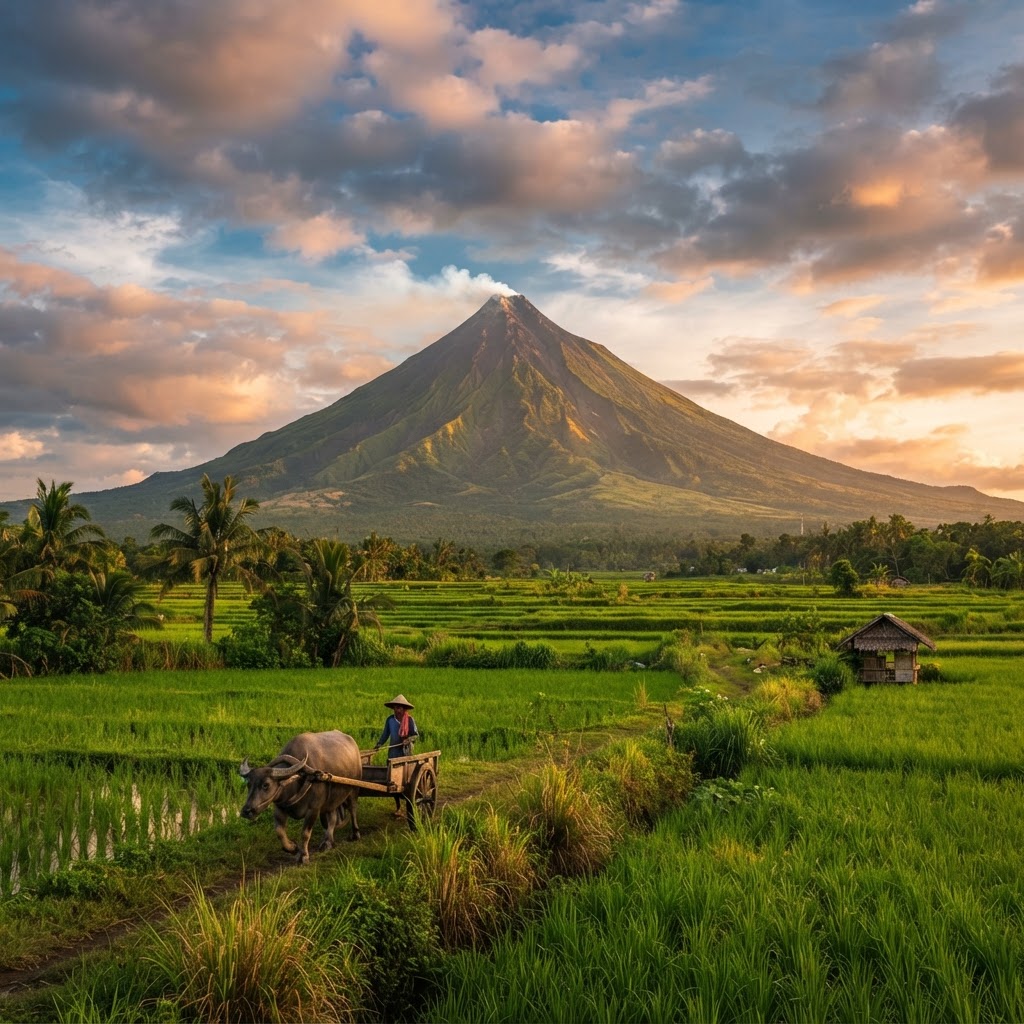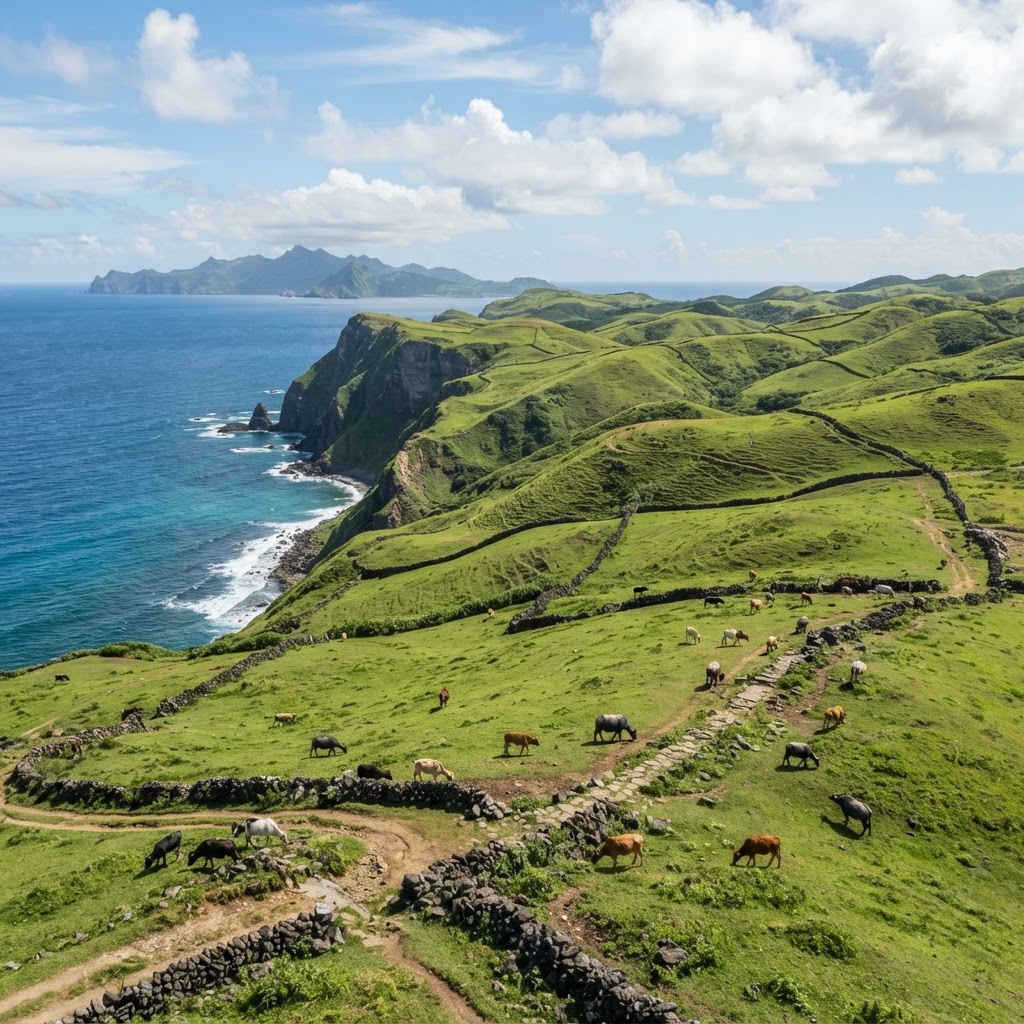
Racuh a Payaman (Marlboro Hills)
A vast stretch of rolling pasture on Batan Island where cattle and carabao graze beside stone hedgerows, with the blue ocean on every horizon — Batanes' most iconic view.
The Philippines' northernmost province — rolling green hills, dramatic cliffs, lighthouses, and the quiet stone-house culture of the Ivatan people.
Batanes is the Philippines' northernmost province — a small archipelago of ten islands where the South China Sea meets the Pacific Ocean. It is the country's smallest province by both land area and population, and its three largest islands — Batan, Sabtang, and Itbayat — hold most of its towns, villages, and windswept landscapes.
The province is shaped by weather. Sitting in the typhoon belt, Batanes taught its people to build in stone: the Ivatan's whitewashed lime-and-coral houses with thick cogon-thatched roofs are among the most distinctive architecture in the Philippines, engineered for generations to stand against the strongest storms.
Life here moves at its own pace. Cattle graze on rolling hills that drop straight into the sea, fishing boats bob in small harbors, and a strong culture of honesty and community still defines daily life. Visitors come for the scenery — and remember the calm.
A vast stretch of rolling pasture on Batan Island where cattle and carabao graze beside stone hedgerows, with the blue ocean on every horizon — Batanes' most iconic view.
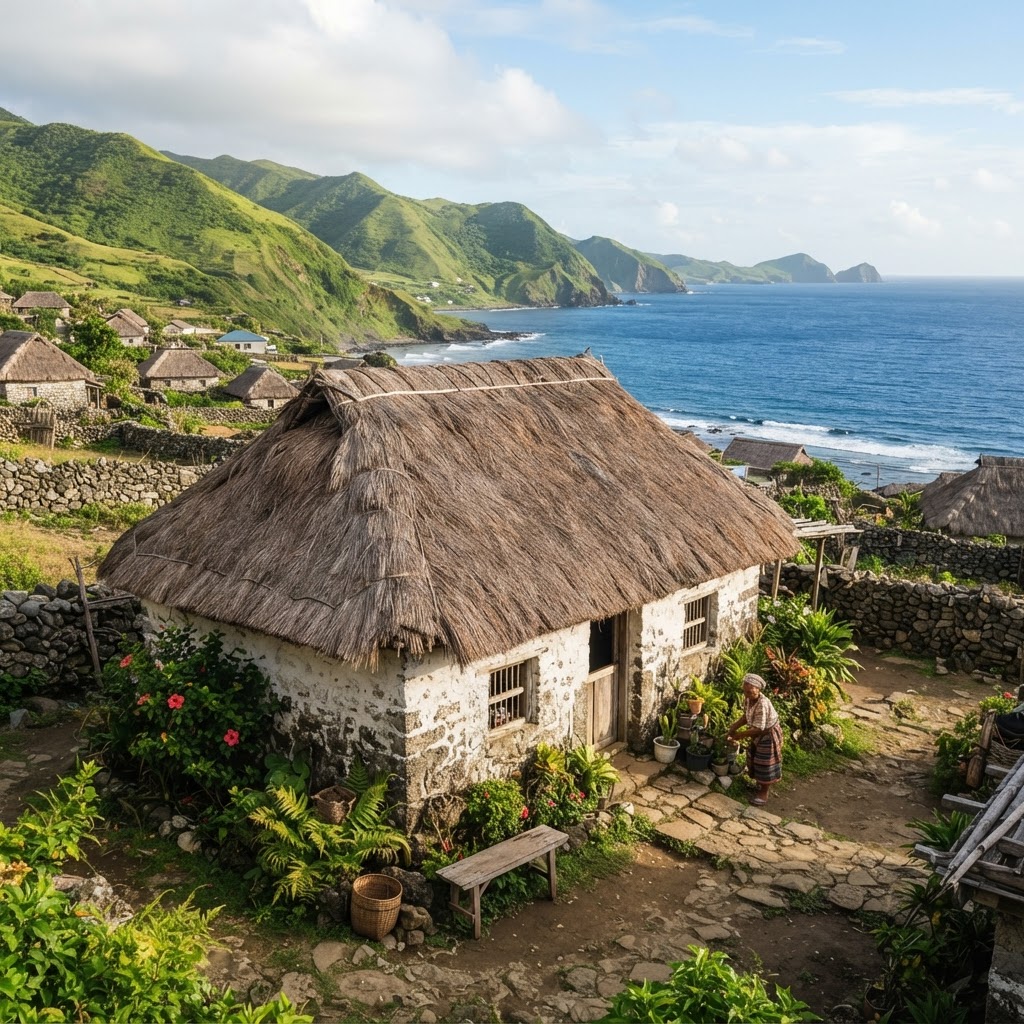
A short boat ride from Batan, Sabtang's villages preserve traditional Ivatan stone houses — thick coral-stone walls and thatched cogon roofs built to outlast typhoons.
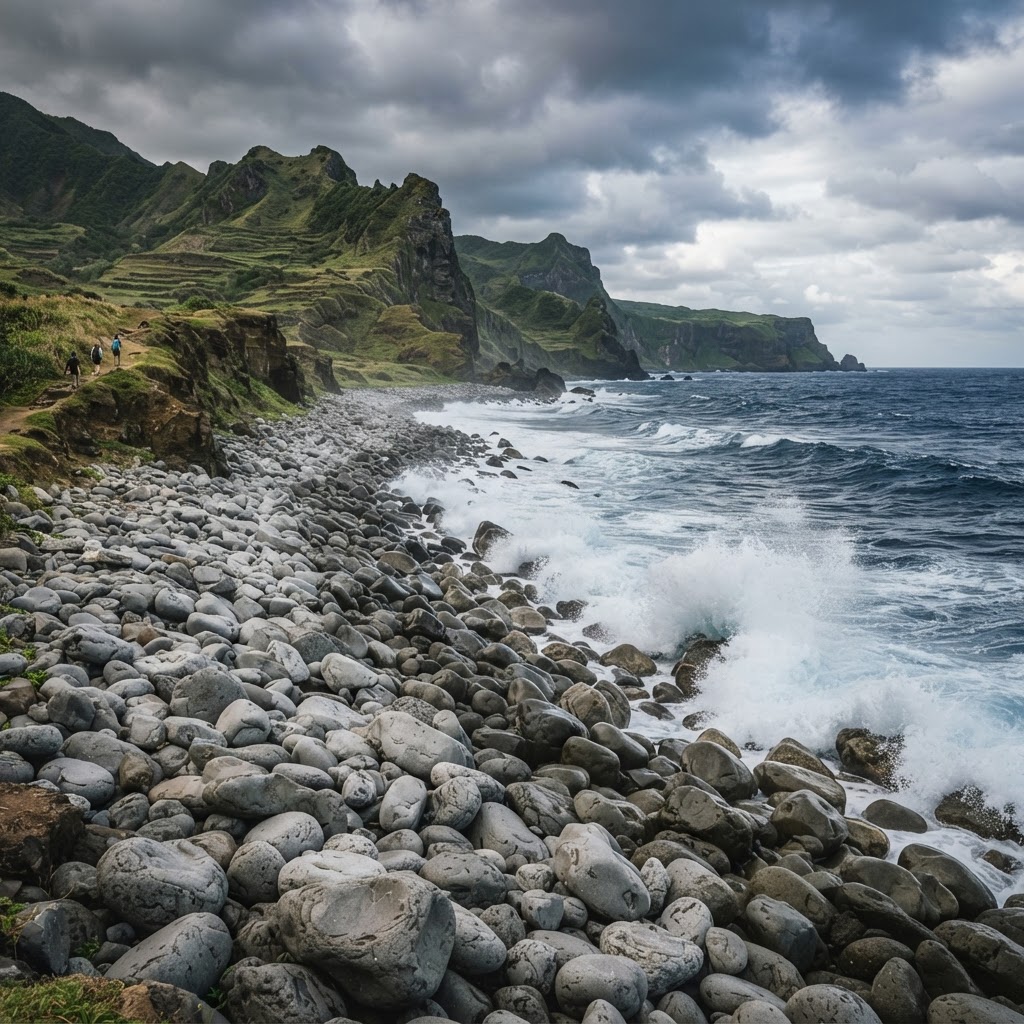
Basco's northern shore is covered not in sand but in smooth volcanic boulders carried down from ancient eruptions, with the Pacific waves crashing endlessly against them.
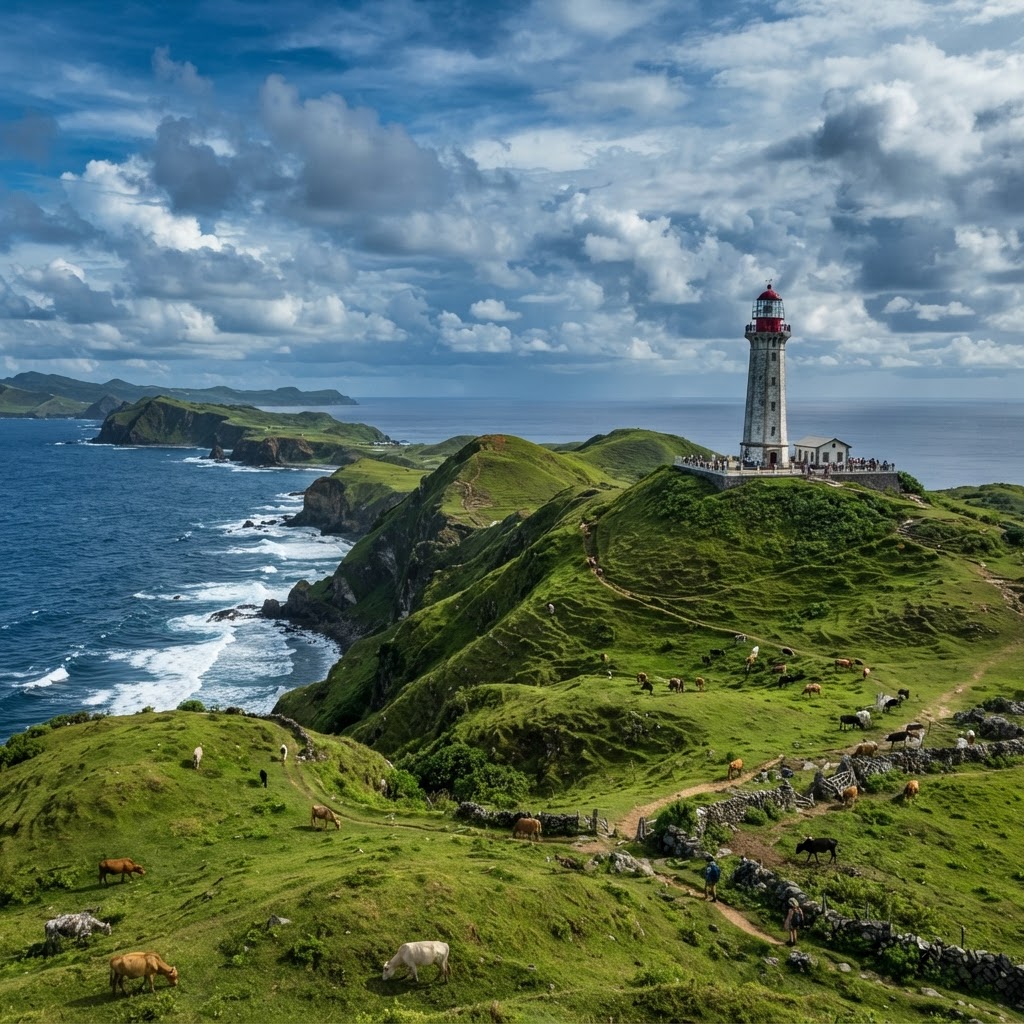
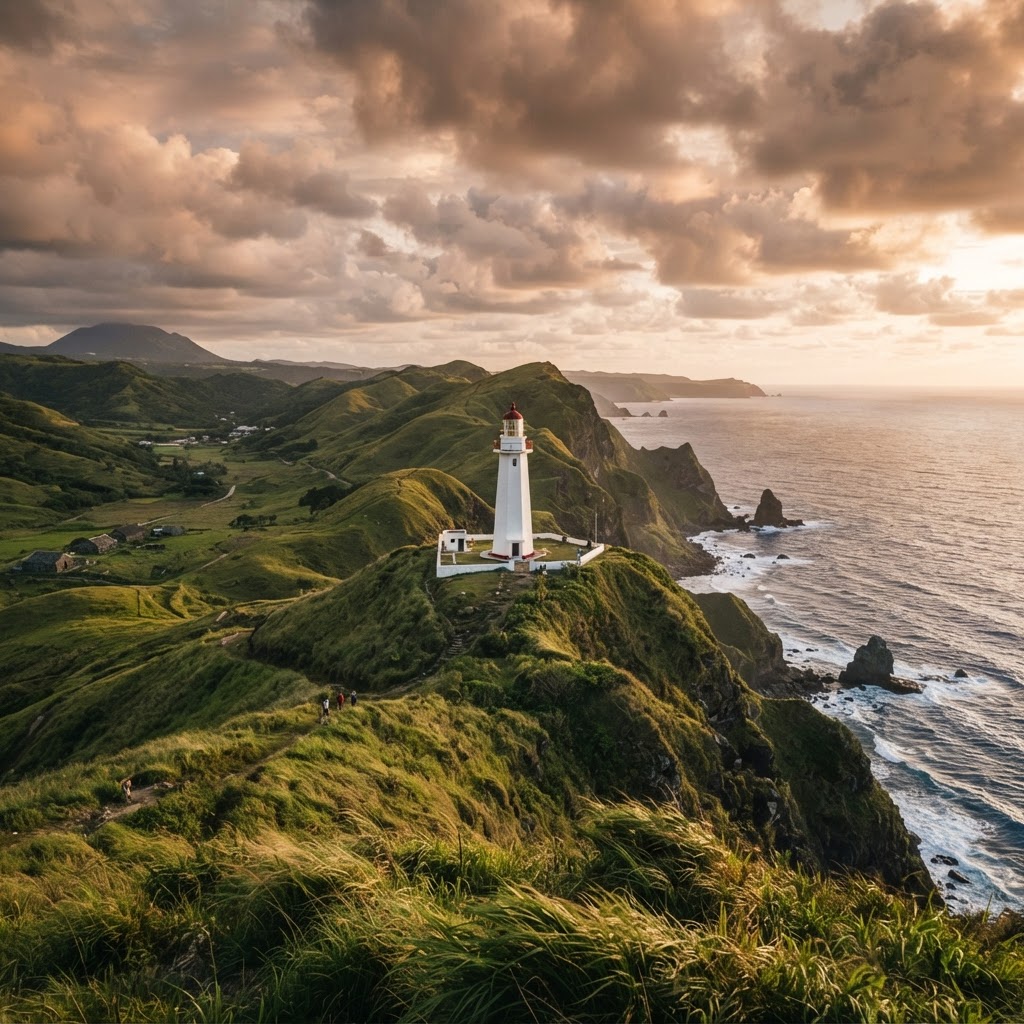
The white-and-red lighthouse above Basco is the province's landmark, with panoramic views over the hills, the town, and the sea in every direction.
the Naidi lighthouse above Basco and its counterparts double as some of Batanes' best viewpoints.
weather-proof architecture found nowhere else in the country.
locals call it Marlboro Hills — where cattle graze against an ocean backdrop.
check locally whether it is open, and bring exact change.
crossings depend on sea conditions, so hold your plans loosely and confirm locally.
a shore of rounded volcanic rocks rather than sand, dramatic in morning light.
compact roads link Basco, the hills, and coastal viewpoints; rent in town and take care in wind and rain.
Basco, the provincial capital, is the practical base — most lodging, food, and transport options cluster here, and island tours start from town.
Stays in the southern half of Batan Island put you closer to the hills and beaches, at the cost of being farther from town services.
Sabtang Island has simple homestays if you want to overnight there; facilities are basic, so most visitors make it a day trip instead.
Wherever you base yourself, book ahead in the busier months — Batanes' small room inventory fills quickly, and weather can reshape travel plans at any time.
March to June offers the calmest seas, the least rain, and the clearest views. Batanes weather can change quickly at any time of year — pack layers and rain gear, and be ready to adjust plans.
Editorial guidance first — when you're ready, each option opens directly with the provider.
Explore accommodation options for your Batanes trip and check current availability directly with Trip.com.
We may earn a commission if you book through this link.
Search flight options for your Batanes trip and confirm current routes, schedules, and availability directly with Trip.com.
We may earn a commission if you book through this link.
Discover a Batanes experience covering Batan and Sabtang, with current details and availability confirmed directly on Klook.
We may earn a commission if you book through this link.
Organized travel in Batanes takes coordination — island logistics, weather windows, and local arrangements. Tell our team what you have in mind and we'll help you put a workable plan together.
Talk to our teamWe only recommend what's real — no invented packages, no invented prices.