The short answer
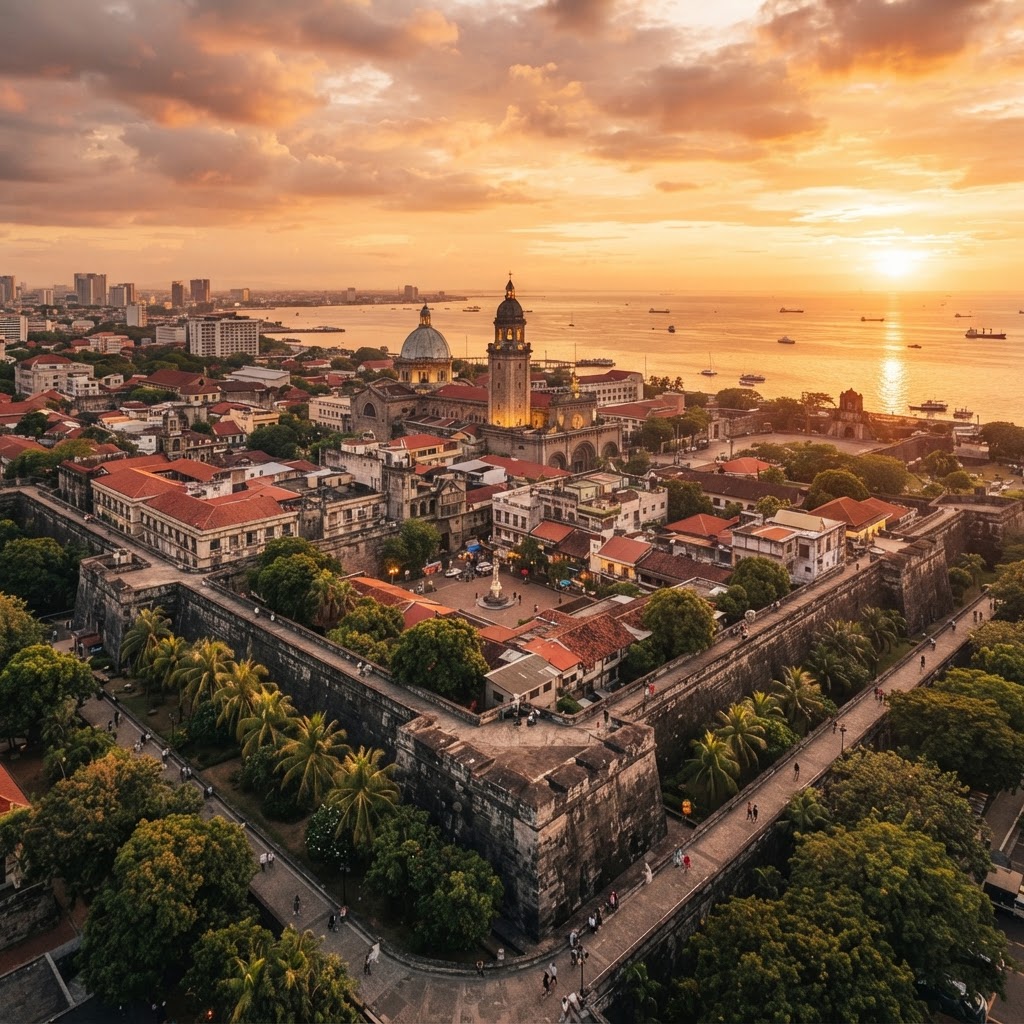
Manila is the country's principal gateway and a destination in its own right: a walled Spanish-era core, a museum and monument quarter, one of the world's oldest Chinatowns, and a set of modern business-and-dining districts. The single most useful planning move is knowing which "Manila" you mean — the historic City of Manila and the surrounding Metro Manila cities are different places with different logistics.
Know which Manila you mean
"Manila" strictly means the City of Manila — home of Intramuros, Rizal Park, Binondo, and the baywalk. Makati, Bonifacio Global City in Taguig, Pasay, and Quezon City are separate cities within Metro Manila. The distinction matters when booking accommodation and planning routes: distances between them are real and traffic is a planning reality of its own.
The historic core: Intramuros, Rizal Park, Binondo
The City of Manila's historic core is genuinely walkable: Intramuros' walls, gates, squares, and churches; Rizal Park and the National Museum complex; and Binondo, the historic Chinatown district, for old family restaurants and street snacks. Schedules, fees, and visitor rules at sites and museums change over time — validate before you go, and dress respectfully at religious sites.
Modern Metro Manila: Makati and BGC
Makati's central business district and Bonifacio Global City carry the modern side of the metropolis — malls, galleries, and a wide concentration of hotels and dining. Both are strong all-round bases for first-time visitors who want comfort and food options, with the tradeoff of distance from the historic core.
Getting around the metropolis
Getting around combines modes: rail lines cover key corridors, while jeepneys, buses, taxis, and ride-hailing reach everywhere else. Journey times vary enormously with distance, time of day, and weather — build generous buffers into every move, especially around flights. Fares and operating arrangements change; confirm current arrangements locally.
Day trips beyond the metropolis
Tagaytay, a highland city south of the metropolis, and Corregidor Island in Manila Bay are classic excursions — each is a separate journey with its own transport and current-operation checks. Plan them as day trips with their own logistics rather than extensions of a city walk.